Why the Best School in Ghaziabad Focuses on Digital Literacy for 21st-Century Learning
The best school in Ghaziabad recognises that digital literacy is about preparing students for an economy where 80% of new jobs will require mathematics and science skills. At Allenhouse we understand the fact that only 31.7% of Indian senior secondary students currently choose the science stream, largely due to inadequate infrastructure and hands-on learning opportunities. So, this blog explores how we and other institutions in Ghaziabad are bridging this gap.
Introduction
Walk into any classroom in Ghaziabad, and you'll notice something unsettling. Students who can flawlessly steer Instagram Reels struggle to format a basic document. They consume digital content voraciously yet lack the skills to create it. This paradox defines India's digital literacy challenge. We are raising a generation of digital natives who aren't digitally literate. Still, India produces 2.55 million STEM graduates annually, second only globally (as per Education For All In India). The disconnect isn't capability, it is opportunity. For parents evaluating the best school in Ghaziabad, understanding digital literacy's true scope matters enormously. It has to be more than about coding apps in isolation. There has to be computational thinking and creative problem-solving. Here below we’ll discuss it all in depth.
6 Reasons Why the Best Schools in Ghaziabad Are Emphasising Digital Literacy
A digital world needs digital skills and people who are well-equipped with the knowledge. Here’s why the best CBSE schools are opting for digital literacy:
1. The Need for Digital Literacy Matters More Than Ever
Digital literacy today is not just about typing in Word or making PowerPoint slides. It is about understanding technology. Building with it. Solving problems through it. Under NEP 2020, coding and computational thinking start from Class 6. Artificial Intelligence becomes an elective in Class 9. Schools are expected to move beyond theory.
Why this urgency? Because India’s tech economy is massive. The IT sector contributes 7.5% of the country’s GDP and generates billions in exports every year. Yet many students still graduate with very little practical tech exposure.
Another concern: many schools still lack proper science infrastructure. That is why the best school in Ghaziabad treats digital literacy as something students experience, not just study.
2. Learning Tech Together: Why Collaboration Matters
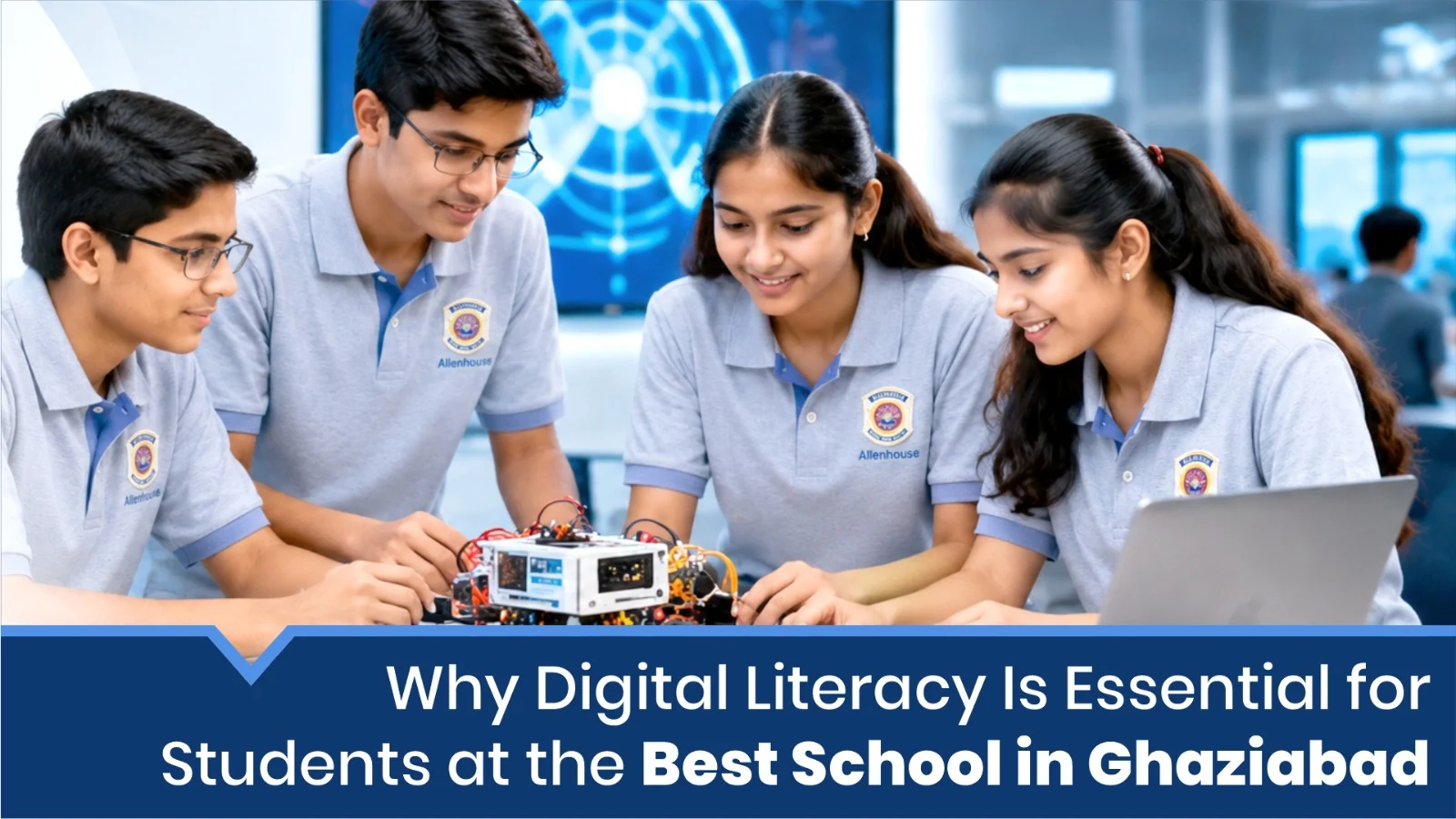
Technology is rarely built alone. Real innovation happens when students discuss ideas, test solutions, and learn from each other. That is why modern schools design structured collaboration inside innovation spaces. Here’s how students typically engage:
Something interesting happens during these activities. Students stop being shy about their ideas. They explain how their robot works. They defend their AI prototype. They answer questions from peers. And in that moment, they are not just students. They become young innovators. Hands-on STEM programs have shown 40% stronger problem-solving persistence compared to traditional learning. When students build things, they don’t give up easily.
3. India’s STEM Pipeline Problem
India produces brilliant engineers. Yet the pipeline has leaks. A lot of leaks.
As per the Education for All in India 2026 report, consider this journey:
Infrastructure gaps add to the problem. Many schools still lack proper laboratories and innovation spaces. This is where innovation hubs change the story. When a student programs a robot or builds a drone prototype, something clicks. Science stops being abstract. It becomes real and exciting. The best schools with active innovation programs often see higher interest in science streams in senior classes. Curiosity grows when learning becomes tangible.
4. Encouraging Girls in Technology
India has some striking numbers. A large percentage of STEM graduates are women. Still, the Engineering and Technology fields see lower female participation. Why? Confidence gaps. They often appear during early adolescence. That is why schools must actively create supportive technology spaces for girls. Effective approaches include:
Women mentors in robotics, AI, and aerospace
Collaborative learning instead of hyper competition
Early exposure to technology tools
Showcasing female innovators and tech leaders
When girls build robots, code projects, or design prototypes early on, stereotypes lose power. Confidence grows.
5. Aligning With India’s Technology Future
India is investing heavily in technology. From the IndiaAI Mission to semiconductor manufacturing and space technology initiatives, the country needs a skilled workforce. And that workforce starts in schools. Several national frameworks now support digital learning:
NEP 2020 – Coding and AI integration
Atal Innovation Mission – Thousands of tinkering labs nationwide
CBSE AI programs – Industry-supported AI curriculum
STEM Hub Schools – Dedicated innovation-focused institutions
Forward-looking schools align their programs with these initiatives. The goal is simple: Prepare students not just for exams. Prepare them for future industries.
6. The Big Mindset Shift: From Consumers to Creators
Most children today grow up surrounded by technology: Phones, Apps, Games, Social media. But using technology is different from creating technology. Innovation environments help students make this shift. They start asking new questions:
Can I build this myself?
Can I improve this idea?
Can technology solve this real problem?
This creator mindset develops several powerful traits:
Fearless experimentation
Systems thinking
Ethical awareness about technology
Continuous curiosity
When a student builds a working device or prints a functional prototype, something powerful happens. They stop thinking, “Technology is complicated.” Instead they think, “I can build things.”
Allenhouse’s Innovation Hub: Learning by Building
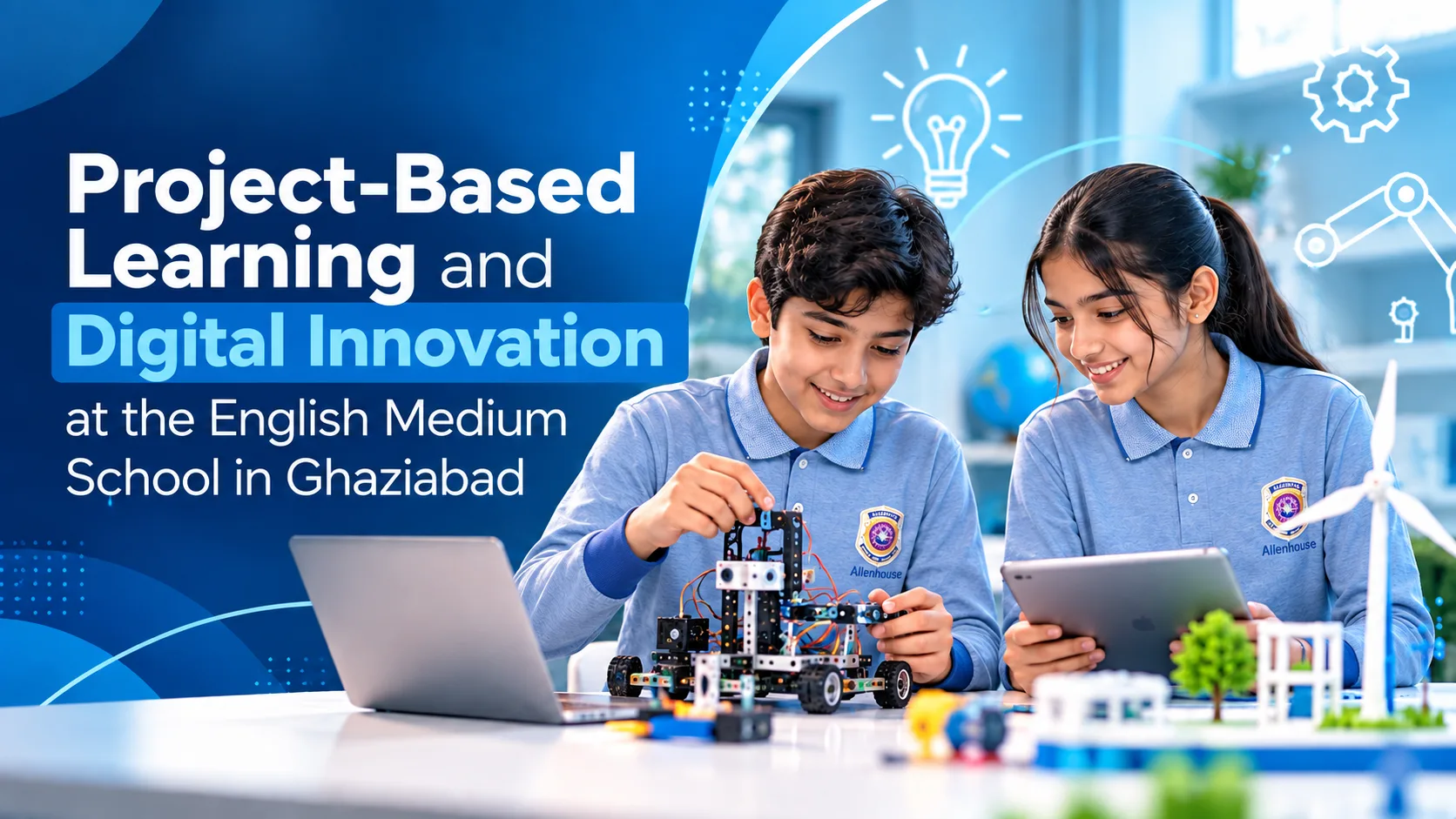
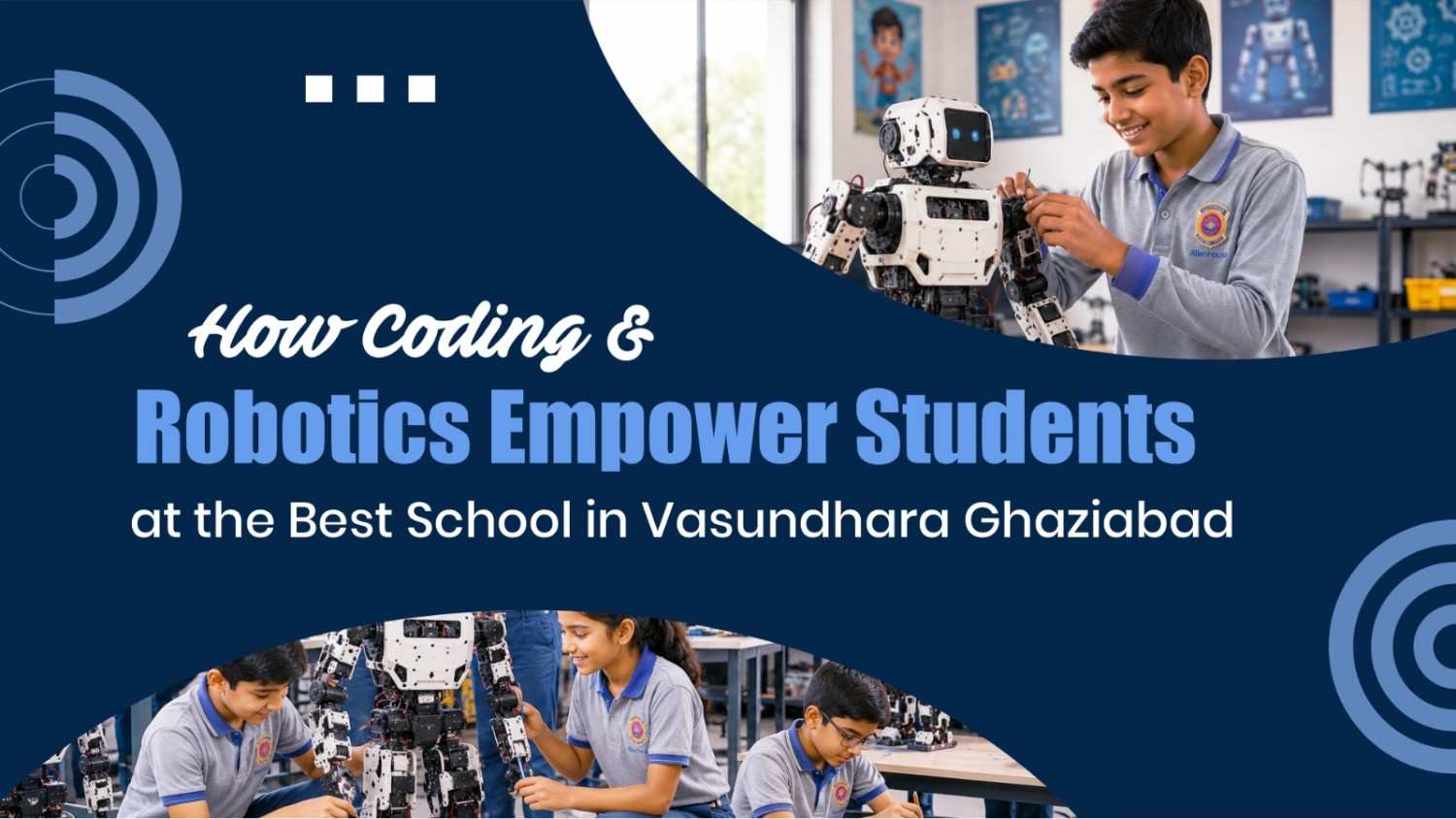
Allenhouse School brings this philosophy to life through its Innovation Hub. This space goes far beyond a traditional computer lab. It is designed for hands-on exploration across multiple technologies. Students work with:
Robotics and drones
Electronics and microcontrollers
3D printing and product design
Artificial intelligence projects
Aerospace learning modules
Projects are the heart of the experience. Students may design:
assistive devices for elderly citizens
environmental monitoring systems
smart irrigation tools for farms
automation solutions for everyday problems
Each project blends different subjects. A single idea may require:
mathematics
science
coding
design thinking
communication skills
In other words, students learn the way real-world innovation actually works.
Conclusion
Digital literacy today is not just another subject. It is a core life skill. Future careers will demand strong technology understanding. The best schools in Ghaziabad must prepare students not just to use tools, but to build with them.
Allenhouse Public School does exactly that. Through hands-on STEAM learning, collaborative projects, and real-world problem solving, students develop both technical skills and innovative thinking. For parents, the question is simple:
Is technology just a classroom accessory?
Or is it something students actively create with?
Because the future will belong to those who design solutions, not just operate devices. Choose a trusted educational institution in Ghaziabad that helps your child build the future!
Your Queries Answered
1. What digital literacy skills should students learn by Class 8?
By Class 8, students should know basic coding (Python or Scratch), computational thinking, and the basics of AI. They should also understand cyber safety, digital citizenship, and how to use online tools for teamwork and projects.
2. How is the Innovation Hub different from a regular computer lab?
A computer lab teaches software. An Innovation Hub builds ideas. Students work with robotics, 3D printing, electronics, and AI. They experiment, build prototypes, and solve real-world problems.
3. Why is digital literacy as important as traditional literacy today?
Because technology is everywhere. Jobs, healthcare, banking, and communication all rely on digital tools. Students need more than screen familiarity. They must know how to create, analyse, and use technology responsibly.
4. What benefits does hands-on STEM learning offer?
Hands-on STEM makes learning stick. Students solve problems, experiment, and collaborate. This improves curiosity, critical thinking, and long-term understanding of science concepts.
5. How can parents support digital learning at home?
Encourage children to create, not just consume. Try coding apps, robotics kits, or design tools. Talk about online safety. And most importantly, stay curious about technology yourself. Kids learn that attitude quickly.