5 Effective Strategies Used by Top CBSE K-12 Schools in Ghaziabad to Improve Students' Listening Skills

Listening is the most used and yet least taught communication skill in school education. At APS Ghaziabad. We have built five concrete strategies into our daily academic life that develop genuine listening ability. This blog breaks down exactly what we do, why it works and what it means for your child's growth.
Introduction
Studies show that students spend nearly 45% of their school day listening, more than reading, writing and speaking combined. And yet almost no school in India has a formal programme to teach them how. We talk endlessly about communication skills. We run elocution competitions and debate clubs and public speaking workshops. All valuable. However, we forget that communication is a two-way street. The half we neglect is listening. A child who listens well absorbs more in every class and walks into any room with a confidence that no amount of speaking practice can manufacture.
At APS Ghaziabad, one of the top CBSE K-12 schools in Ghaziabad, we stopped treating listening as a passive byproduct of good behaviour and started treating it as a teachable, measurable skill. This blog covers the five strategies we use, why each one works and what families should know about what we are building here.
What are the Best Strategies Adopted by Allenhouse CBSE K-12 Schools in Ghaziabad?
There is a lot to look into beyond the fee structure of CBSE schools in Ghaziabad at the time of picking one. Here’s one such aspect that often goes ignored. Read on for how schools in Ghaziabad and Allenhouse in particular does to enhance listening skills:
Strategy 1: Audio-Visual Smart Classrooms That Demand Active Listening
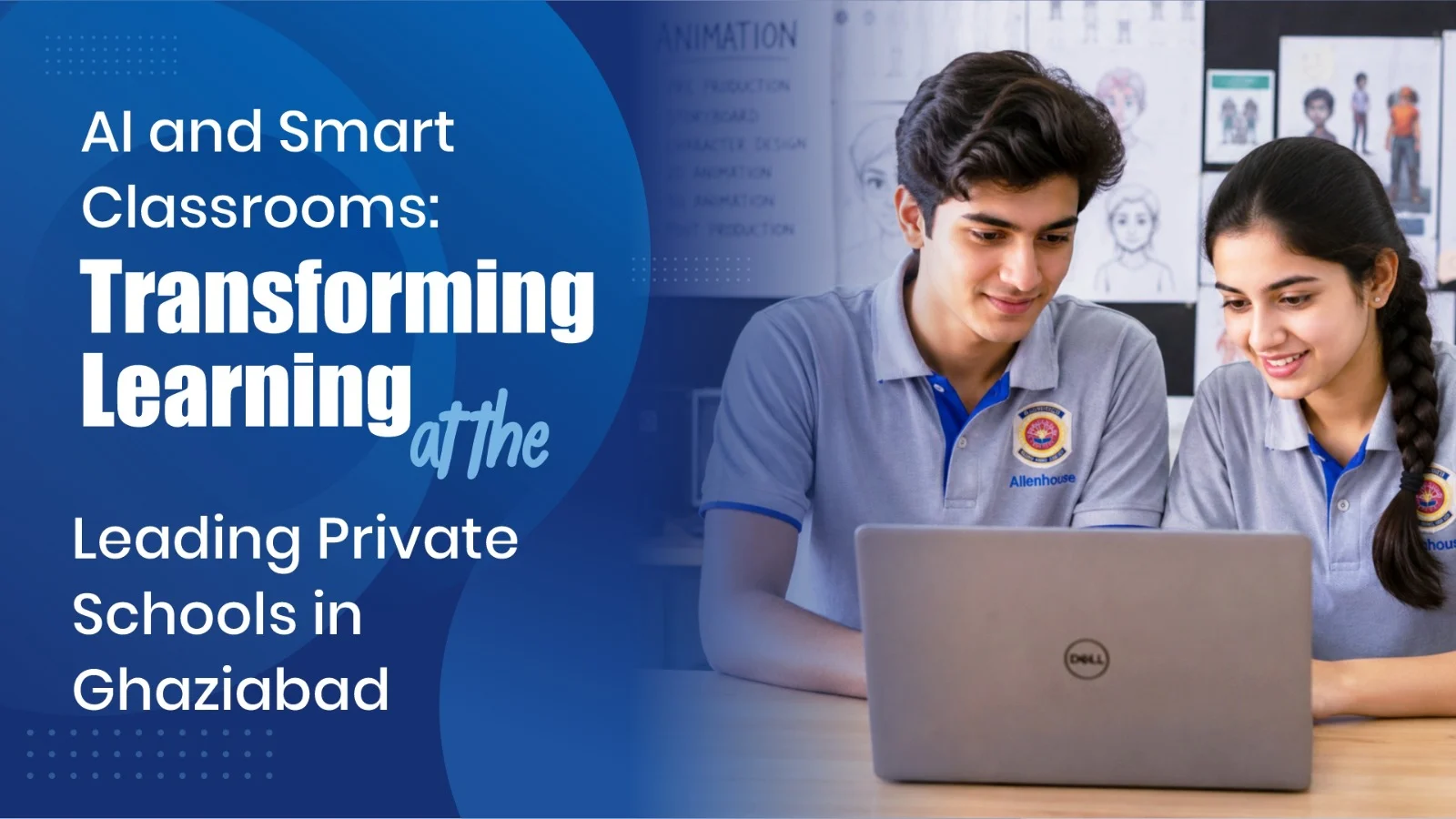
The easiest thing in the world is to sit in a classroom and not actually hear anything. Passive presence is not listening. It is attendance. At APS Ghaziabad, one of thebest CBSE board schools in Ghaziabad, our smart classrooms are designed to make passive presence impossible. When a lesson involves multimedia (animated explanations, documentary clips, audio-based comprehension exercises) students cannot coast. The content moves. It does not repeat itself on command. Paying attention becomes a practical necessity, not a moral virtue.
Smart boards present information in layered, multi-sensory formats that require students to track audio and visual information simultaneously
Audio comprehension exercises are built into regular lessons. Students listen to a passage once and respond, building concentration and retention
Recorded discussions and presentations are played back so students can evaluate how well they actually understood versus how well they thought they understood
Teachers use deliberate pacing and strategic pausing, asking questions mid-explanation so students cannot mentally switch off and re-engage only at the end
Complex concepts introduced through audio-visual formats show measurably higher retention rates than text-only delivery
The goal is not to make lessons entertaining. The goal is to make listening an active, conscious act that students practice every single day without realising they are practicing it.
Strategy 2: Peer Learning and Group Discussions That Make Listening Social
There is a particular kind of listening that only happens when the speaker is your own age and the stakes feel real.
When a teacher speaks, students can half-listen and still survive. They will catch the notes from a friend later. When a classmate is mid-explanation and the group needs to respond, there is nowhere to hide. You either heard them or you did not and the conversation makes that clear immediately.
At APS Ghaziabad, structured peer learning is not a break from serious academics. It is one of the most rigorous listening environments we create.
Small group discussions are structured with specific roles, such as speaker, listener, questioner, summariser. We adopt rotating practices so every student gets to do every function
Students are asked to paraphrase what a classmate just said before adding their own point. This is a deceptively simple technique that makes active listening non-negotiable
Cooperative learning tasks require groups to synthesise multiple perspectives into a single output, which only works if everyone actually heard everyone else
Peer feedback sessions teach students to listen for content, not just tone but separating what is being said from how it is being said
Group discussions expose students to different communication styles, accents and pacing, building the flexibility that real-world listening requires
The social pressure of peer interaction is not a distraction from learning. Channelled well, it is one of the most effective learning mechanisms available.
Strategy 3: The Oluxi Smart Skills Programme with Listening as a Life Skill
Most CBSE K-12 schoolsteach communication as performance. Stand up, speak clearly, make eye contact and sit down. At APS Ghaziabad, we use the Oluxi Smart Skills programme to teach communication as something deeper, i.e., a set of interpersonal abilities that include, at their core, the capacity to truly hear another person.
The Oluxi programme sits at the intersection of academic skill-building and Social Emotional Learning. It is where listening stops being a classroom technique and starts becoming a character trait.
The programme is integrated into the school week, not a one-off workshop but a consistent, progressive curriculum
Students reflect on their own listening habits through structured self-assessment exercises
Teachers trained in the Oluxi methodology model active listening in their own classroom behaviour because children learn more from what they observe than what they are told
Strategy 4: Feedback-Driven Communication and Structured Debate
Here is the uncomfortable truth about feedback: most students do not actually listen to it. They hear the grade, they register whether it is good or bad and they move on. The specific, actionable content of the feedback disappears. Teaching students to genuinely receive feedback is one of the most valuable things a CBSE K-12 school can do. And it is, at its core, a listening skill. At APS Ghaziabad, feedback is not a one-directional delivery. It is a structured conversation.
Structured debate programmes require students to listen carefully to opposing arguments before constructing a rebuttal because you cannot counter what you did not properly hear
Feedback sessions are followed by student paraphrasing. Teachers ask "what did you take from that?" before moving on, closing the loop on comprehension
Peer critique exercises teach students to separate the discomfort of being assessed from the content of the assessment. This is a distinction that requires emotional regulation and focused listening
Regular oral assessments include a listening comprehension component, making it a formally evaluated skill rather than an assumed one
Students in higher classes practice synthesis tasks, i.e., hearing multiple perspectives in a discussion and producing a coherent summary
A student who learns to receive feedback well becomes an adult who learns from experience rather than just accumulating it.
Strategy 5: Mindfulness, SEL Integration and the Quiet Discipline of Attention
The biggest enemy of listening is not noise. It is an internal conversation. It is the mental rehearsal of what to say next, the distraction of an unrelated worry, the habit of being physically present while mentally somewhere else entirely.
This is not a discipline problem. It is a skill gap that can be addressed with the right practice. At APS Ghaziabad, we integrate mindfulness and Social Emotional Learning into our school day. We understand that attention which is the foundation of listening is actually trainable.
Mindfulness exercises at the start of the day help students transition from the noise of the commute to the focused state that learning requires
Character-building programmes include explicit discussions about patience, presence and the respect embedded in giving someone your full attention
Emotional regulation sessions help students manage the anxiety and internal chatter that prevent genuine listening, particularly useful for students who struggle with test pressure or social anxiety
Reflective journalling after discussions asks students to record what they heard, not what they said, reorienting attention toward reception rather than expression
Teachers are trained to notice and name quality listening when they see it because what gets recognised gets repeated
The research is consistent on this point: students with stronger emotional regulation skills are significantly better listeners. The two are not separate competencies. They are the same competency, approached from different angles.
Conclusion
Listening is the skill nobody teaches and everybody assumes. At APS Ghaziabad, one of the top CBSE K-12 schools in Ghaziabad, we have stopped making that assumption. Through smart classrooms that demand attention, peer learning that makes listening social, the Oluxi programme that makes it a life skill, feedback structures that make it analytical and mindfulness practices that make it possible, we have built listening into the fabric of what we do every day.
If you are looking for a best CBSE board school in Ghaziabad that develops the whole child, come and see what we have built.
Your Queries Answered
1. Why Do Top CBSE K-12 Schools in Ghaziabad Focus on Listening Skills?
Listening is a core skill that supports learning, communication, collaboration and academic success. At APS Ghaziabad, listening is treated as an important skill that helps students understand concepts better and build stronger interpersonal abilities.
2. How Do CBSE K-12 Schools Build Listening Skills?
CBSE K-12 schools combine communication development with social-emotional learning. It helps students improve active listening, attention, comprehension and thoughtful communication through regular practice.
3. What Is the Fee Structure at APS Ghaziabad?
The school shares a transparent fee structure during the admission process. Parents can contact APS Ghaziabad directly for the latest details on tuition fees, transport and other applicable charges.
4. Is Admission Open at APS Ghaziabad for the Upcoming Academic Year?
Admissions are generally open for the upcoming academic session, subject to seat availability. Families are encouraged to begin the process early and connect with the admissions team for current timelines and requirements.
5. How Does A Good School Differ From Other CBSE Schools in Ghaziabad?
Good CBSE K-12 schools combine academics with communication skills, social-emotional learning, smart classroom experiences and holistic development programmes, helping students grow both academically and