How the Best K-12 School in Ghaziabad Builds Future-Ready Skills
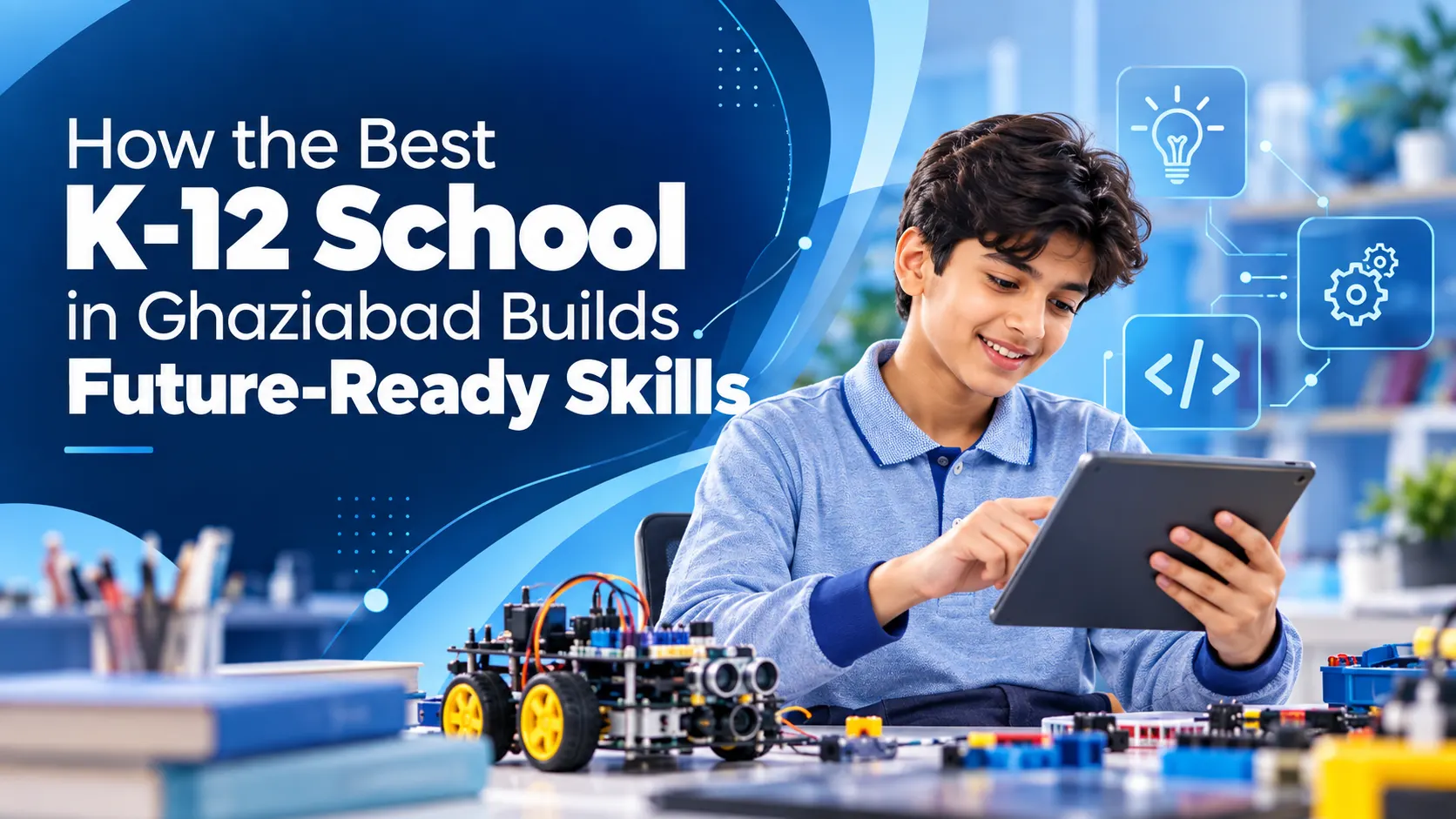
The best K-12 school in Ghaziabad gets kids ready for whatever comes next. It gives them a solid academic base. But it also teaches them to think on their feet, speak their mind, work with others, get creative, handle tech and solve real problems. A school that's actually future-ready lets kids try things out, make calls and learn from messing up. That's how you raise kids who don't need hand-holding.
Introduction
Kids in school today will face things tomorrow that we can't even picture yet. So what should a good K-12 school actually teach them? How to handle the unknown. And how does that happen? By pulling together book learning and the skills they can use. Critical thinking and problem-solving need to grow right alongside maths and science. That's what the good schools are already doing. They are keeping grades strong while making sure kids can actually think. So if you're a parent evaluating the best K-12 School in Ghaziabad, dig into how they teach, who's teaching, what's in the curriculum and what kids actually get to do. Don't just get wowed by the buildings. This blog will help you in the process.
What Does "Future-Ready" Mean in K-12 Education?
Future-ready education means kids learn their subjects, but they also pick up the skills they'll actually need down the road. Like figuring things out when plans change. Speaking up and making themselves understood. Learning things on their own without someone walking them through it. It's not about memorising chapters to score marks. It's about kids getting curious, thinking differently and making their own calls.
The whole point? A future-ready kid should know how to use what they've learned, not just parrot it back. Key skills covered at the best K-12 School in Ghaziabad include:
Critical thinking- Looking at info and deciding what makes sense.
Problem-solving- Taking a messy situation and breaking it into steps.
Communication- Getting your point across, whether you're talking or writing.
Creativity- Trying new angles and coming up with ideas no one else thought of.
Collaboration- Working with people who aren't like you.
Digital literacy- Using tech without letting it use you.
Adaptability- Picking up new things and rolling with changes.
Self-management- Owning your own learning and choices.
In a city like Ghaziabad, which is moving fast with new tech and industries, this shouldn't be some special programme. It should be happening in regular classrooms every single day. Kids need room to ask "why," argue a point, try an experiment, fail and go again.
Which Future-Ready Skills Should Students Develop Before Class 12?
Students should have a grip on thinking critically, communicating well, being creative, working in teams as well as solving problems. They should know how to handle digital tools and adapt when things shift. These skills help them actually understand what they're studying instead of just cramming for tests. They also get better at facing stuff they haven't seen before and figuring it out themselves.
The best K-12 school in Ghaziabad can build this gradually:
Primary years: Keep their curiosity alive, get them talking and working with others, tackle simple problems.
Middle school: Start research, get them reasoning things through, keep collaborating, stretch their creative muscles.
Senior school: Let them learn independently, make bigger decisions, analyse deeper, connect learning to real careers.
All through: Keep them digitally aware, communicating clearly and backing themselves.
The idea isn't to add some new subject called "future skills." It's to weave this stuff into whatever they're already doing.
How Does a Future-Ready School Build Skills Alongside Academics?
A school that is doing future-readiness right doesn't treat skill-building as an extra. It bakes it into regular lessons. So instead of just reading a textbook, kids debate the topic. The chapters are not read and forgotten. They would then run an experiment or build something and present it to the class. They solve a problem that actually happens in real life. They learn the concept and figure out how to use it.
Think about it: a science class where kids actually do the experiment, not just read about it. Math class where they tackle problems their parents face at work. Language class where they argue a point or write something original. Good teaching looks like:
Asking questions and letting kids hunt for answers
Hands-on practice where they can touch and try
Projects that take time and thought
Classroom discussions where everyone jumps in
Presentations and proper debates
Lab work that gets messy
Research they do themselves
Group work where everyone has a job
Solving problems that exist outside the classroom
This doesn't mean going easy on academics. Strong concepts still matter. What changes is how kids arrive at those concepts.
How Do K-12 Schools Develop Future-Ready Skills Without Compromising Board Exam Preparation?
Schools can absolutely do both. You teach concepts properly, keep up regular practice, test often and get kids applying what they know. Solid subject knowledge is still the bedrock. But when you add projects, discussions and problem-solving, kids understand things deeply enough to handle weird questions they've never seen before.
A balanced approach looks like:
Teaching concepts clearly, not just shortcuts
Sticking to NCERT and the actual curriculum
Regular tests so nothing slips through
Practice that prepares them for exam formats
Questions that make them apply knowledge, not just recall it
Assignments that make them think analytically
Revision sessions and space to clear doubts
Study habits they can manage on their own
This balance gets even more important in senior classes. Board exams aren't just memory tests anymore. Kids need to understand, read between the lines, structure answers and use what they know in new ways. A future-ready approach actually helps with this. It doesn't pull them away from exam prep.
How Does Technology Help Build Future-Ready Learners?
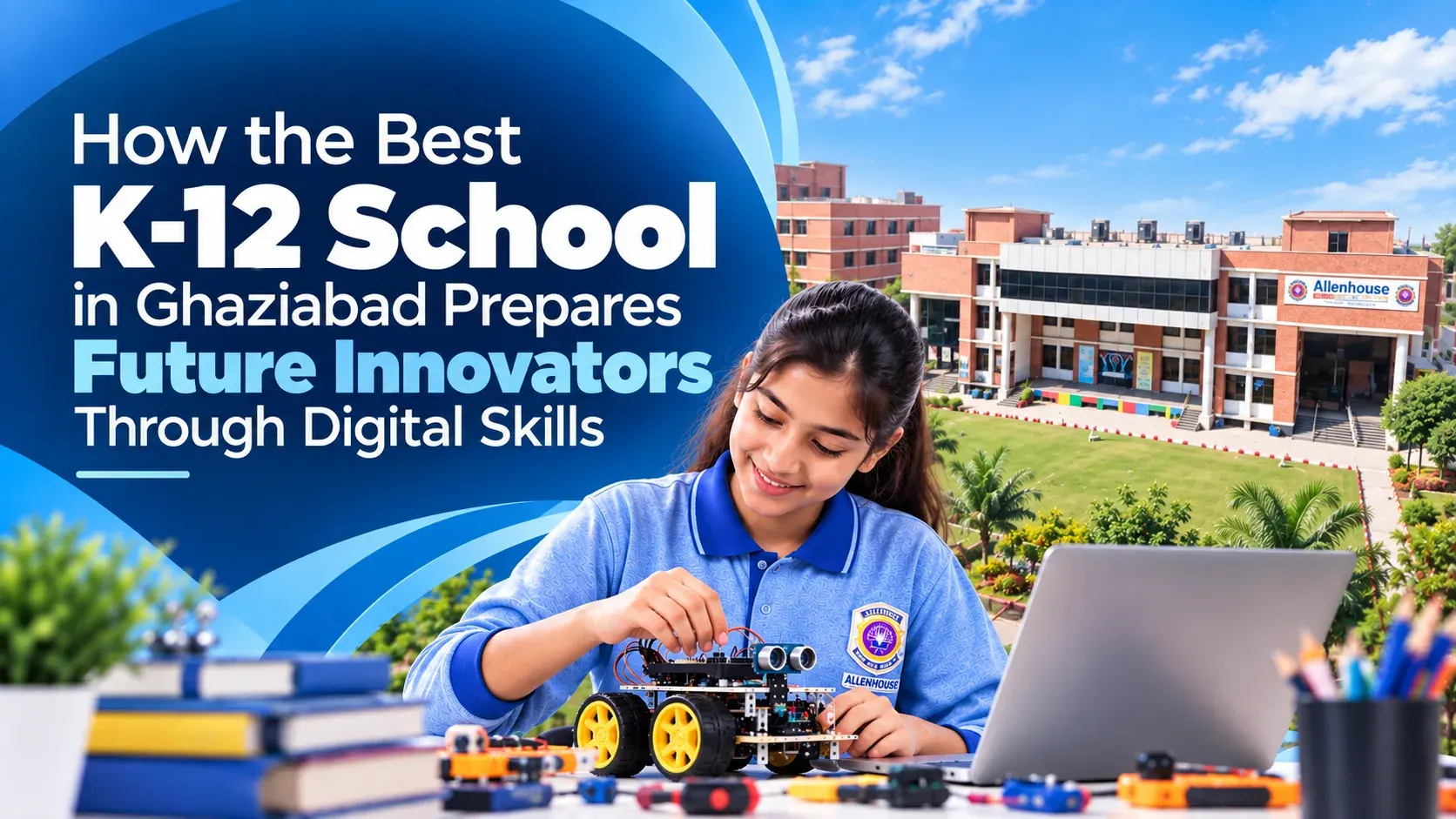
Tech in school should be a tool, not a gimmick. Used right, it opens up information, makes learning interactive and gets kids comfortable with the digital world. A solid school uses tech with a clear learning goal in mind, not just to say they have smartboards or tablets. Tech at the best K-12 school in Ghaziabad can help with:
Digging up info online
Simulations and visuals that makes concepts click
Coding and thinking like a computer
Apps that actually teach something
Digital presentations that look professional
Working with classmates online
Multimedia projects that mix video, audio and text
Using AI and online resources without being reckless about it
What matters isn't how much tech you have. It's how well it's used. A room full of gadgets doesn't mean kids are learning better. They need someone teaching them to question what they find online, check if it's true, protect their own data and use tools without getting owned by them. The teacher still runs the show.
How Do Real-World Experiences Develop Future-Ready Skills?
Classroom learning only goes so far until kids actually use it. Projects, sports, clubs, competitions, performances and community work give them chances to talk, team up, fix problems, take responsibility and make decisions that actually matter to them.
Different activities build different strengths:
Sports: You learn to work as a team, show up consistently and bounce back from losses.
Debates: Reasoning, actually listening to the other side and speaking with structure.
Clubs: Taking initiative and working with people who share your interest.
Projects: Planning, researching and troubleshooting when things go sideways.
Competitions: Backing yourself and making quick calls under pressure.
Performing arts: Expressing yourself and thinking creatively.
Community work: Caring about people outside your bubble and owning your role in society.
These activities also show teachers sides of kids they might miss in regular class. The quiet kid in the back might light up when presenting a group project. The one who never raises their hand might step up and lead a team activity. Future-ready schools make room for both kinds of moments.
What Makes a Future-Ready K-12 School Different From a Traditional School?
A future-ready school keeps academics tough but adds active learning, real-world use and skill-building. Traditional schools often lean harder on teachers talking and kids memorising. The best ones don't pick sides, in fact they take what's good from both and mix them together.
You can see the difference in how everyday learning works.
How Is Conceptual Learning Different From Rote Learning?
Conceptual learning means kids get why and how something works. Rote learning is mostly stuffing facts into your head. A future-ready school cares more about understanding, so kids can tackle problems they've never seen instead of praying the exact question comes up in the exam.
In a conceptual classroom, kids are pushed to:
Explain why they think what they think.
Ask why a method actually works.
Compare different ways to solve the same thing.
Take what they learned and use it somewhere new.
Connect lessons to things that happen at home or on the street.
Memorising still has its place. You need to remember words, formulas, facts and basics. The problem is when that's all anyone does.
How Does Active Learning Help Students Become Future-Ready?
Active learning pulls kids into the process instead of having them sit there while information washes over them. Discussions, experiments, problem-solving, projects and presentations force them to think, talk and decide while actually understanding their subjects better.
Active learning means:
Asking questions without fear
Working through problems in small groups
Getting hands-on in the lab
Teaching a concept to a classmate
Standing up and presenting research
Building physical or digital models
Digging into real cases and figuring out what happened
Teachers don't disappear. Their job just shifts from talking to kids to walking them through how to understand and use what they're learning.
Why Should Schools Look Beyond Marks When Nurturing Students?
Marks tell you something, but they don't tell you everything. They won't show you if a kid can work in a team, speak up in a meeting, think creatively when stuck, or make responsible choices. Schools need to care about grades and also about whether kids can actually function in the real world.
Look at the whole picture:
Do they actually understand what they study?
Can they get their point across?
Do they play well with others?
Are they emotionally mature enough to handle pressure?
Can they come up with original ideas?
Are they physically active and healthy?
Do they step up and lead when needed?
Can they learn without someone breathing down their neck?
Grades still matter. No one's saying they don't. The bigger goal is making sure kids can use their knowledge without freezing up.
How Can Parents Identify Whether a School Is Truly Preparing Children for the Future?
Parents can spot a real future-ready school by watching how learning happens, not by counting how many facilities are advertised. The teaching style, the teachers themselves, how the curriculum is built, how kids are tested, whether students actually participate and chances to learn by doing. These tell you way more than a shiny computer lab or a fancy auditorium.
Ask straight questions:
How do teachers get kids to ask questions?
How often are they working on actual projects?
How does the school check skills that aren't just written tests?
What sports, arts and clubs are actually running?
How is tech used- is it meaningful or just for show?
Are teachers experienced and do they stick around?
How does the school handle kids who learn differently?
How do they prep students for higher classes and board exams?
And definitely visit. Watch whether kids seem switched on or zoned out. Check the walls for student work and projects. Listen to what teachers ask. The real clues show up in ordinary classrooms on ordinary days.
Why Does Choosing the Right K-12 School Matter for Long-Term Development?
Picking the right school matters because kids spend their most formative years there. They're building how they study, how they interact, how confident they are and how they think about problems. A consistent K-12 environment can grow these abilities step by step, adjusting as kids get older instead of starting from scratch every few years.
A continuous journey has clear phases:
Primary school: Spark curiosity, lay down basics, build confidence.
Middle school: Strengthen reasoning, get them working with others, start independent learning.
Secondary school: Sharpen analytical thinking, build academic discipline.
Senior secondary: Go deep into subjects, stand on their own feet, handle complex ideas.
The payoff is continuity. Kids don't have to relearn study habits, communication, or independent thinking every time they change schools.
For parents looking at a Secondary-English Medium School in Ghaziabad, the same rule applies. English instruction alone doesn't cut it. How they teach and whether kids get to actively learn matters just as much.
What Should Parents Consider When Choosing a Future-Ready School in Ghaziabad?
When evaluating a school in Ghaziabad, parents should look at academic strength, teacher quality, curriculum, teaching style, support for individual kids, infrastructure, activities and whether the school thinks long-term. The right fit matches your child's needs and gives them enough chances to grow independent, confident, communicative and practical.
Here's a straightforward way to weigh your options:
Don't ignore practical stuff either, such as location, fees, commute and whether your child actually feels comfortable there. The "best" school isn't the one with the longest brochure. It's the one that gets the mix right: academic strength, quality teaching and real student growth.
Conclusion
The best K-12 school in Ghaziabad should get kids through today's exams and ready for whatever tomorrow throws at them. Strong academics are non-negotiable. So are communication, critical thinking, creativity, teamwork, problem-solving and adaptability. A truly future-ready school in Ghaziabad doesn't make kids choose between marks and skills. It builds both.
At Allenhouse, we set up a K-12 environment where kids grow stronger now and more capable for what's ahead. Come see for yourself. Book a visit!
Your Queries Answered
1.Which School is Ranked Among the Best in Ghaziabad?
Allenhouse Public School keeps showing up on lists of top Ghaziabad schools. It ranked among the top 8 in Uttar Pradesh at the National School Innovation Ranking & Awards (NSIRA).
2.What Is the Fee Structure of the Best K-12 Schools in Ghaziabad?
Fees at top K-12 schools in Ghaziabad vary a lot depending on the school, class level, facilities, curriculum and admission process. Parents should look at the full annual cost (tuition, admission fees, transport, books, uniforms, activities and any extra) before comparing. Fees also jump significantly between primary and senior classes.
3.Are Future-Ready Schools in Ghaziabad More Expensive Than Traditional Schools?
Not automatically. Future-ready schools aren't necessarily pricier than traditional ones. Fees depend on curriculum, teachers, buildings, facilities, location and the school's overall approach. Tech and specialised programmes can push costs up, but paying more doesn't guarantee better preparation for the future. Compare what you actually get, not just the price tag.
4.Is a Future-Ready K-12 School Suitable for Every Child?
Most kids can thrive in a future-ready school if the teaching balances different learning styles with solid academics. Whether it's the right fit depends on your child's age, interests, how they learn best, their personality, academic needs and whether they're comfortable with the school's pace and expectations.
5.What Future-Ready Skills Matter Most at Different Stages of K-12 Education?
Future-ready skills should grow as kids grow. Little ones need curiosity, basic communication and simple problem-solving. Older kids need sharper reasoning, research skills, teamwork, learning independently, making decisions and digital skills that set them up for college and adult life.