How a Top CBSE School in Ghaziabad Prepares Children with Strong Planning Skills for Life

Most parents think about planning skills the way they think about a driving licence: something to figure out later, once the important things are sorted. But schools that take child development seriously know that planning is not a skill you acquire after education ends. It is the skill that makes everything else in education actually stick. Allenhouse Ghaziabad built its entire curriculum philosophy around this understanding. Read on to learn how.
Introduction
There is a difference between a student who studies hard and a student who studies well. The first one puts in the hours. The second one knows which hours matter and what to do with them. They discover how to adjust when the original plan stops working. That second student is not more talented. They are better equipped and the school they attended definitely played a role. Planning, in the deepest sense, is the ability to look at a goal and work backwards to the steps required to reach it. It helps manage resources and time along the way and course-correct when reality diverges from the plan. It is also one of the hardest things to teach inside a traditional classroom.
Allenhouse Ghaziabad, among the top-rated CBSE schools in Ghaziabad, has deliberately built a learning environment where planning is a capacity they develop through daily experience, across subjects, across grade levels and across the full range of what school life involves.
Why Are Planning Skills Important for Children?
It is the set of skills that help children regulate their emotions and reduce stress while building academic independence. By learning to break large tasks into smaller steps and manage their time, children develop a sense of control over their routines. This practice boosts problem-solving and sets a foundation for lifelong success.
Reasons why planning skills are important for children:
Improved Academic Performance: Children who know how to plan can estimate how long homework or projects will take. This prevents last-minute cramming and missing deadlines, leading to better focus and study habits.
Stress Reduction: Predictability helps children understand what to expect next. Visual schedules and routines eliminate the frantic rush and result in fewer power struggles.
Better Problem-Solving: Planning trains children to define a goal. They anticipate the steps required to reach it. When obstacles arise, they learn to evaluate alternative strategies.
Independence and Self-Regulation: Practising time management and task organisation equips children to sail through future responsibilities without the need for adult supervision.
How Does a Top CBSE School in Ghaziabad Teach Planning Skills?
Planning skills develop in environments that are deliberately designed to require them, regularly, across years, in ways that feel purposeful rather than performative. At Allenhouse Ghaziabad, one of the top CBSE K-12 schools in Ghaziabad, we have built planning into the architecture of how students learn. It is not a once in a blue moon workshop or an occasional exercise but a consistent thread running through academics, activities and daily school life.
Goal-Oriented Learning
A child who understands why they are doing something plans better. They surpass one who is simply following instructions. Goal-oriented learning means students know what they are working toward before they begin. They are not bound to just what the task is but what a good outcome looks like as well as how they will know when they have reached it.
Students are taught to define success before starting a task, which builds the forward-thinking habit that planning requires
Teachers frame assignments in terms of outcomes rather than only processes, giving students a destination to plan toward
Self-assessment is built into the learning cycle, so students develop the ability to evaluate their own progress rather than waiting to be told how they are doing
When students can articulate their own goals, they make better decisions about how to use their time and energy to reach them
Project-Based Learning
Nothing teaches planning quite like a deadline you cannot move and a project too large to complete the night before it is due. Project-based learning puts students in exactly this situation, regularly and intentionally. Working on a project that spans multiple weeks requires a student to think backwards from a due date, identify what needs to happen and in what order and make realistic estimates about how long each stage will take. These are not soft skills. They are the practical mechanics of planning and they are only learned by actually doing them.
Multi-week projects require students to create their own timelines and manage their own progress
Collaborative projects add the complexity of coordinating with others, which teaches students to plan around variables they cannot fully control
Presenting work to an audience, whether classmates, teachers, or parents at the annual Tech Fest, adds real stakes that make the planning feel worth doing
When projects do not go according to plan, which they reliably do not, students practice the most important planning skill of all: adjusting without abandoning
Time Management Through Daily Routines
Consistent daily routines are one of the most underrated tools for building time management in children. When a student knows what is coming next, they spend less mental energy anticipating and more mental energy doing. Over time, the structure of the routine becomes internalised and the student begins to carry that structure with them even when the external routine is not there.
At top CBSE schools, the school day is structured with this in mind. Transitions between activities are predictable. Expectations for each part of the day are clear. Students know what is expected of them and when, which frees them to focus on the work rather than the logistics of navigating an unpredictable environment.
Structured timetables reduce the decision fatigue that makes time management harder for young students
Regular assessment milestones across the academic year teach students to pace their preparation rather than sprint before a single high-stakes event
Homework expectations are consistent enough that students can plan their evenings rather than approaching each night as an unknown quantity
As students move into senior classes, increasing ownership over their own study planning is transferred gradually, building independence through practice rather than assumption
Leadership Opportunities
Leadership is one of the most effective planning teachers available, because it makes planning other people's experience, not just your own. A student running a house council meeting has to think ahead: what needs to be covered, in what order and in how much time. A student organising a school event has to coordinate multiple moving parts, anticipate what might go wrong and build enough flexibility into the plan to absorb the unexpected. For instance:
House council responsibilities require students to plan communications, meetings and initiatives across a term
Students in leadership roles experience the direct consequences of poor planning and the equally direct satisfaction of a well-executed plan
Younger students observe older ones planning and executing, building familiarity with the process before they are required to lead it themselves
The confidence that comes from successfully planning and delivering something real is a different kind of confidence than academic achievement produces and it compounds across both
Co-Curricular Activities That Build Responsibility
A student who manages the demands of academics alongside a sport, a musical instrument, a debate commitment, or a community service project is doing a combo that is cognitively demanding: balancing multiple competing priorities with fixed time constraints. This is what adult professional life requires too. And the earlier a child practices it, in an environment where the stakes are meaningful but not catastrophic, the more naturally they handle it when the stakes are higher. At top schools, students are not passive participants in a scheduled activity. They are expected to manage their own preparation, balance their commitments and take responsibility for showing up ready.
Preparing for a music performance requires weeks of self-directed practice, not just showing up on the day
Sports training schedules teach students to plan their academic work around fixed commitments rather than treating everything as flexible
Debate preparation requires research, structuring and rehearsal managed largely independently
Students who commit to an activity across a full academic year build the habit of sustained, self-directed effort that planning in every other area of life depends on
How Strong Planning are Built at Allenhouse
Here’s how at Allenhouse Public School we ensure every student develops strong planning skills:
Learning by Doing, Not Just by Reading
The most direct way to build planning skills in a child is to put them in situations that require planning. Not hypothetically, but actually. A project with a deadline. A lab experiment that needs preparation before execution. A presentation that has to be structured and delivered to an audience. These everyday academic experiences teach students how planning works in real life.
At Allenhouse Ghaziabad, activity-based and experiential learning is part of the regular learning approach, not just an occasional classroom activity. Students regularly take part in:
Classroom projects that require them to divide a large task into smaller steps
Presentations that teach them how to organise thoughts and communicate clearly
Experiments and practical activities that encourage preparation before action
Collaborative assignments that build coordination and responsibility
These activities mirror what planning looks like outside school. Students learn to manage time and prioritise tasks. They bring an idea from the initial stage to completion.
Robotics, STEM and the Logic of Sequential Thinking
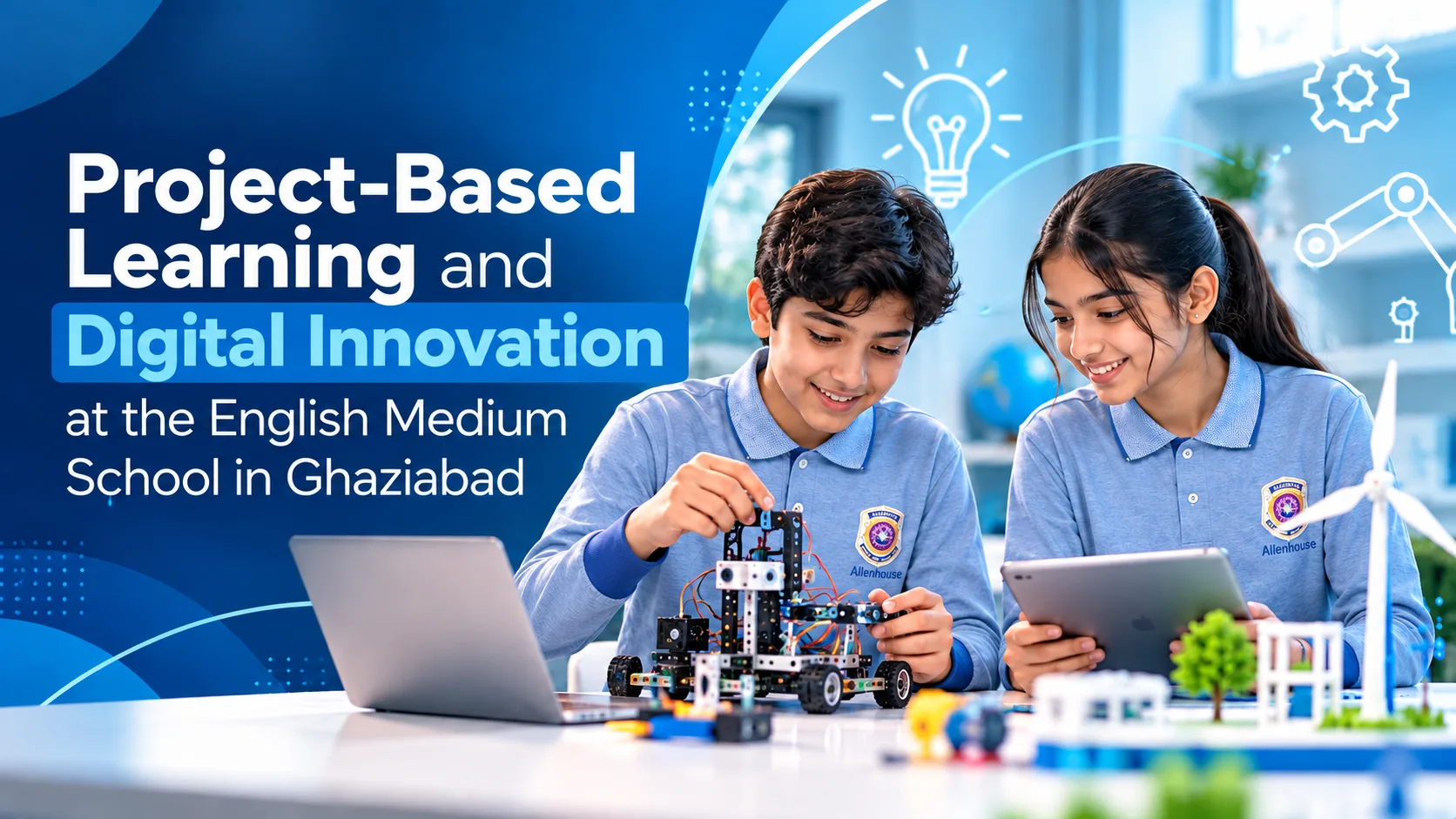
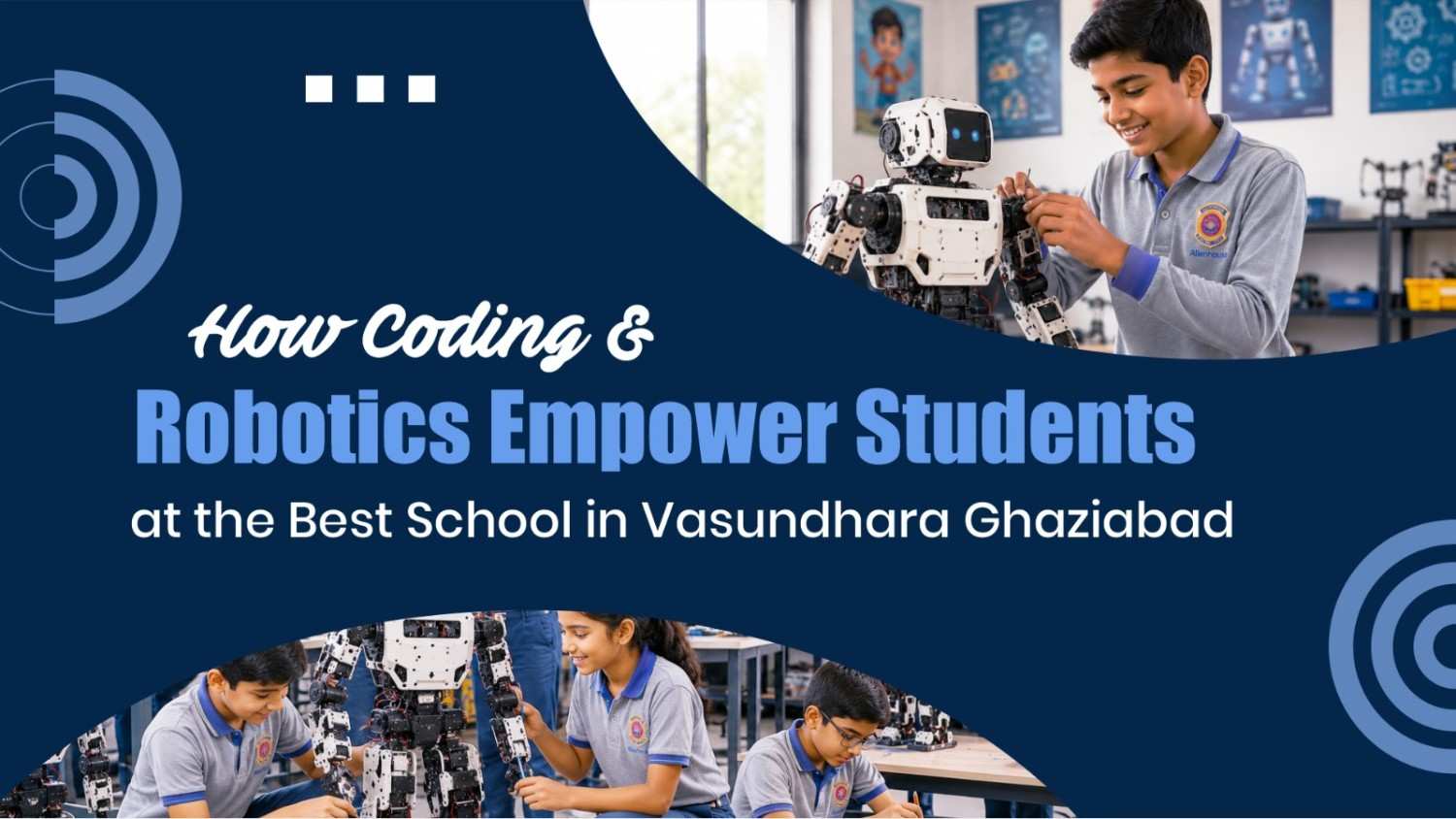
One of the most valuable parts of STEM education is not just the technical knowledge students gain. It is the way it shapes their thinking. Robotics, for example, is built around logical sequencing. A robot follows instructions exactly. If the result is incorrect, students have to examine the process, identify the gap and rethink their approach.
To live up to the expectations of being a top CBSE school in Ghaziabad, we bring forth through robotics and STEM activities, students learn that:
Every outcome begins with a well-thought-out process
Small steps contribute to a larger goal
Testing, improving and trying again are part of problem-solving
Planning before execution saves time and reduces errors
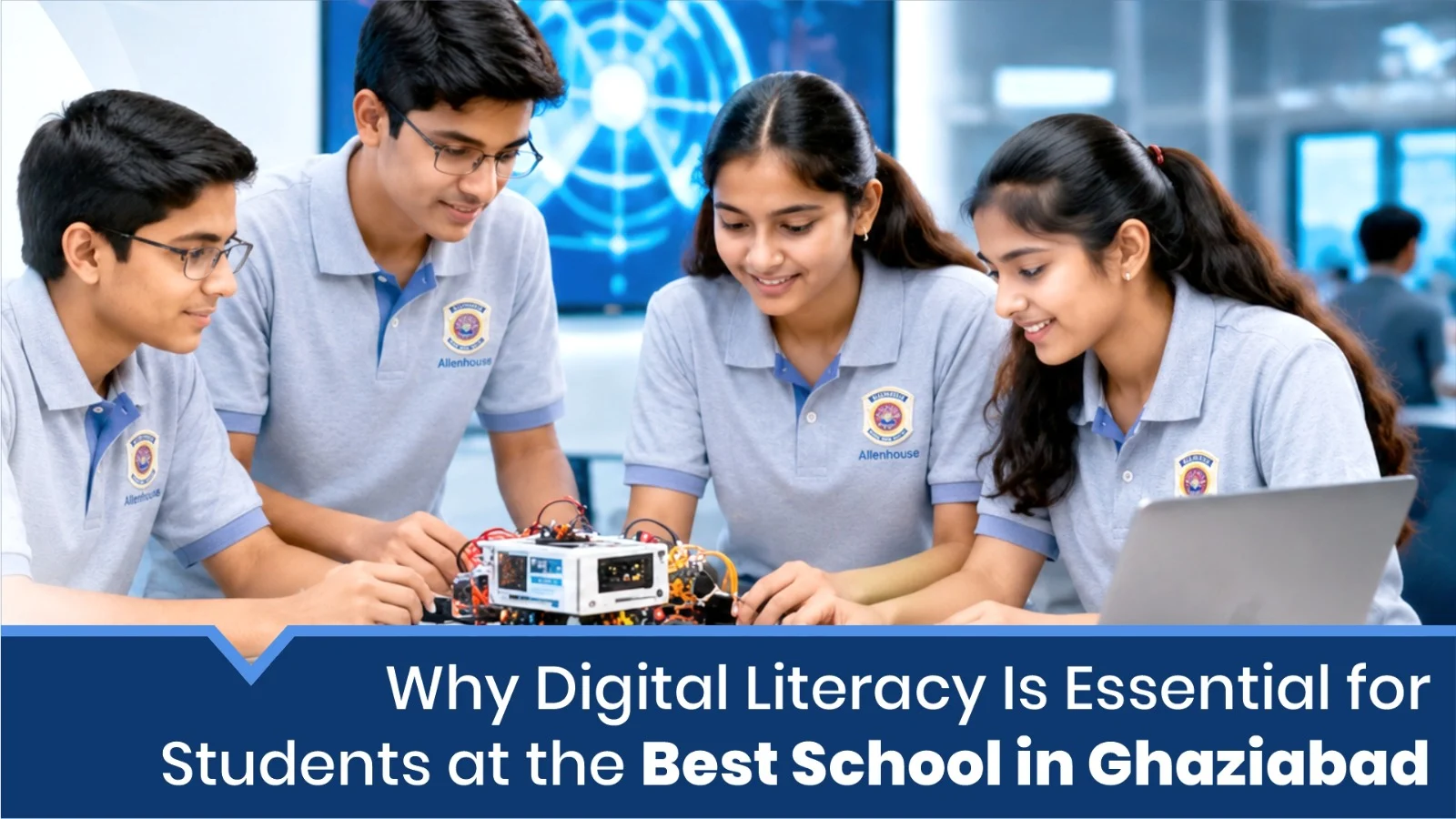
The dedicated Robotics and STEM labs at Allenhouse Ghaziabad give students regular exposure to this style of thinking. The skills developed in these spaces extend beyond technology. Students begin applying the same structured approach to subjects like mathematics, science projects, writing assignments and future career decisions.
Personalised Learning: Knowing Yourself Before Planning for Yourself
Good planning starts with self-awareness. Students need to understand their strengths and identify areas where they need improvement. They recognise the learning methods that work best for them. Without this understanding, goal-setting can become unrealistic. Students may create plans but those plans may not match their actual needs.
The Personalised Learning Centre at Allenhouse Ghaziabad helps students build this awareness by focusing on:
Identifying individual strengths and learning patterns
Setting realistic academic goals
Creating strategies based on specific improvement areas
Helping students take ownership of their learning journey
For many students, this is the first time they actively reflect on how they learn. This awareness helps them plan their studies with greater clarity and confidence.
OLUXI and the Human Side of Planning
Planning is not only about schedules and checklists. It also depends on emotional control, teamwork and the ability to handle challenges. A student may have a strong plan, but executing it requires:
Managing pressure during difficult situations
Working effectively with others
Communicating ideas clearly
Staying motivated when things do not go as expected
The OLUXI Smart Skills programme at Allenhouse focuses on these important life skills. Through structured activities, students develop emotional intelligence, collaboration skills and interpersonal awareness. These abilities help students execute their plans better in real situations, whether it is a group project, a team activity or eventually a professional environment.
Time, Voice and Confidence: The Extracurricular Contribution
Planning skills also show up in how students manage competing responsibilities, express their thoughts and organise ideas under pressure. Academic learning alone may not provide enough opportunities to practise these abilities. Extracurricular activities create spaces where students learn by participating.
At Allenhouse Ghaziabad, activities such as:
Career counselling sessions
Theme assemblies
Public speaking opportunities
Student-led activities
help students build confidence and clarity. It's also worth noting that communication and planning are closely connected skills. A student who plans well but cannot communicate that plan clearly, to a teacher, a group of peers, or eventually a professional audience, is only halfway there. For a closer look at how Allenhouse Ghaziabad builds strong communication skills alongside these planning capacities, learn how reputed CBSE Board School in Ghaziabad builds strong communication skills.
The Role of Teachers in Building Planning Skills
Teachers are the most consistent planning models for a child outside their family. When a teacher breaks a lesson into clear stages or sets deadlines for a project and shows students how to work backwards from a due date, they are demonstrating what planning looks like in practice, repeatedly.
Teachers who give structured project timelines teach students to use them, not just submit the final product
Asking students "what do you need to do first?" before they start builds the habit of sequencing
Consistent feedback on process, not just outcome, rewards the planning behind the work
Teachers who model their own planning openly show students that organisation is a skill, not a personality type
How Parents and Schools Can Work Together
Planning skills built at school need reinforcing at home. That's how they stick! A child who learns to use a project timeline at school but returns to a home where every deadline is managed by a parent is receiving two contradictory messages. They struggle to understand who is responsible for their time. The most effective approach is a genuine partnership where both environments expect and support the same habits.
Parents can ask "what is your plan for this?" rather than "when is it due?" shifting ownership back to the child
Regular, brief conversations about the week ahead build the forward-thinking habit outside school
Schools can share assignment timelines with parents early enough that families can support planning, not rescue from it
Avoiding last-minute rescuing, however uncomfortable, allows natural consequences to teach what reminders cannot
How Planning Skills Benefit Students Beyond School
The student who learns to plan does not just become a better student. They become a more capable adult. Time management, goal-setting and the ability to break large challenges into manageable steps are among the most consistently cited skills that employers, universities and life in general demand and rarely find fully developed.
University students with planning habits manage multiple deadlines without crisis
Professionals who can prioritise and sequence work advance faster and experience less burnout
Planning builds resilience because a student who has a plan recovers from disruption faster than one who does not
The confidence that comes from consistently following through on a plan compounds across every area of life, academic, professional and personal
Conclusion
Planning is not a subject you can teach in a single class or build in a single term. It develops through repeated experience, across years, in classrooms and labs and extracurricular spaces and life skills programmes that all pull in the same direction. As a top CBSE school in Ghaziabad, Allenhouse has built an environment where that development happens naturally, because the school's design makes it almost unavoidable. Students who move through this environment don't graduate with a certificate and a set of memorised facts. They graduate with a way of approaching the world that tends to serve them well long after the specific content of their syllabus has faded.
Your Queries Answered
1.Why are planning skills important for students?
Planning skills are important because they teach students how to manage their tasks independently. The process of acquiring these skills also enhances problem-solving and helps tackle stress.
2.How do CBSE schools teach life skills?
Through activity-based learning, project work, STEM labs and structured life skills programmes, CBSE schools give students repeated, practical experience with goal-setting, task management and execution across their entire school journey.
3.What activities improve planning skills in children?
Activities like project work, puzzles, sports, group tasks, time-bound assignments and creative projects help children develop planning and organisational skills. These experiences teach them to set goals, manage time and solve problems effectively.
4.How can parents help children become better planners?
Parents can encourage children to use daily routines, simple to-do lists, calendars and achievable goals. Allowing children to make decisions, manage small responsibilities and reflect on their progress also strengthens planning skills.
5.What should parents look for in a CBSE school?
Choose a CBSE school with experienced teachers, a strong academic programme, safe infrastructure, modern learning facilities and opportunities for sports, arts and life skills. A supportive learning environment and regular parent communication are also important.