How the Best K-12 School in Ghaziabad Prepares Future Innovators Through Digital Skills
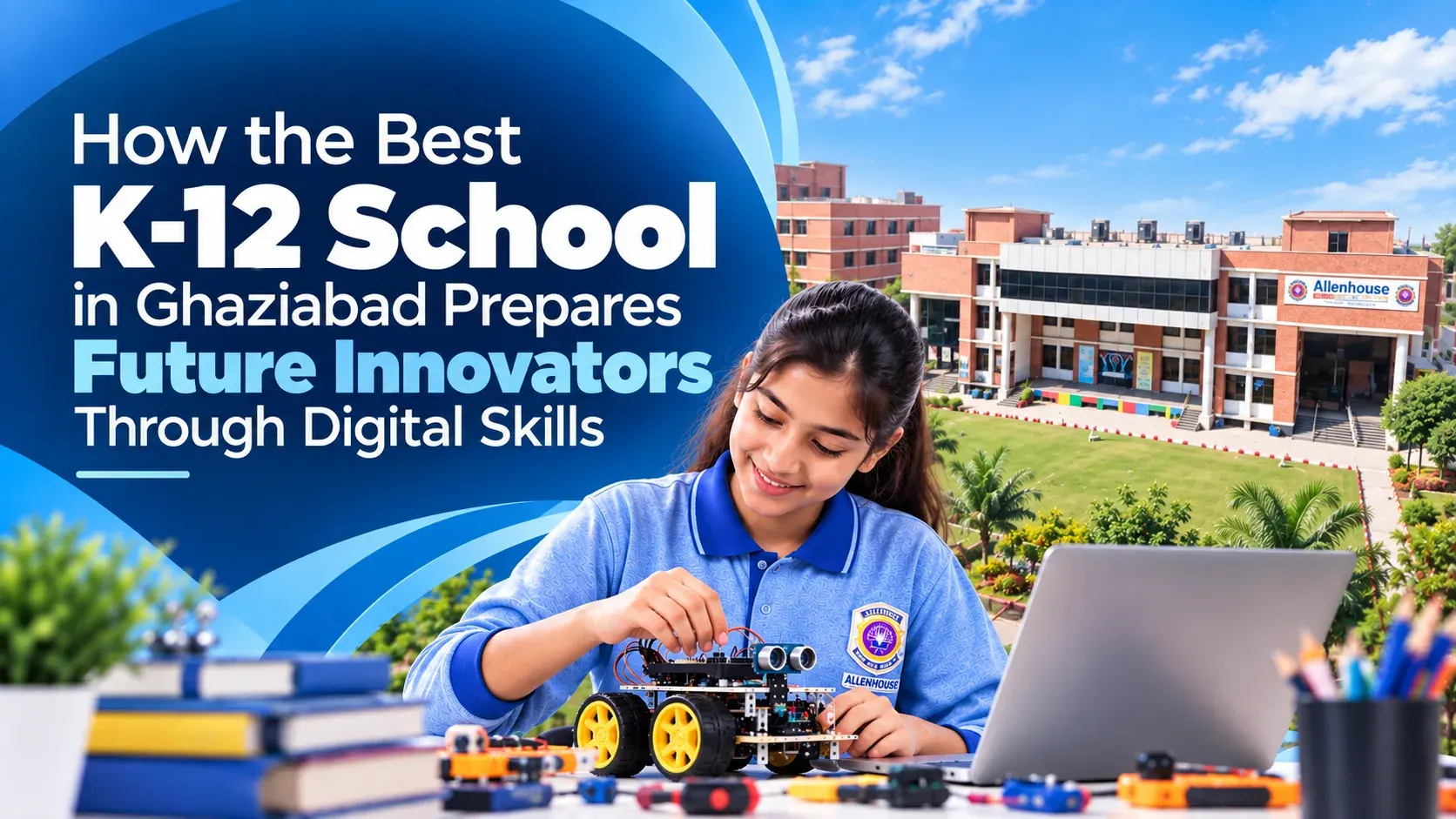
The jobs that will define the next twenty years do not all exist yet. But the skills required to succeed in them are already identifiable. They are being built now, in classrooms, labs and learning environments that understand where the world is headed. The best K-12 schools in Ghaziabad built digital skills programmes around exactly this understanding. This blog covers what that looks like, why it matters and what families should know.
Introduction
If you knew your child would spend their career working alongside artificial intelligence, managing systems that did not exist five years ago and solving problems that have not yet been defined, what would you want their school to have taught them?
Not just mathematics and literature, though those matter. Not just how to use a computer, though that is a start. You would want them to know how to think computationally, how to approach a problem they have never seen before, how to build something from scratch and how to evaluate information critically in an environment designed to overwhelm them with it.
At Allenhouse Public School, Vasundhara, the best K-12 school in Ghaziabad, we have been building this kind of education not as a vision for the future but as a daily practice in the present. This blog walks through exactly what we teach, why we teach it and why the distinction between a future-ready school and a traditionally strong one matters more now than it ever has.
Why Digital Skills Are Important for School Students?
Twenty years ago, a student who could use Microsoft Word was digitally literate. Today, digital literacy means something categorically different and schools that have not updated their definition are quietly falling behind.
The World Economic Forum consistently identifies critical thinking, creativity, complex problem-solving and technology fluency among the top skills that future employers will require. These are not soft skills sitting alongside technical competence. They are the technical competence of the coming decade.
Automation is reshaping every industry, not just technology. A student entering the workforce in 2035 will work alongside AI tools in medicine, law, finance, agriculture and the arts, not just in software development
Coding is increasingly a foundational literacy in the same way reading was in the twentieth century. A child who understands how software thinks is a child who understands the systems that increasingly govern daily life
Digital citizenship, the ability to navigate online environments critically, responsibly and safely, is now a prerequisite for functioning in modern society, not a bonus skill
Innovation requires technical confidence. A student who has never built anything digitally, who has only consumed technology rather than created with it, will be a follower in environments that reward builders
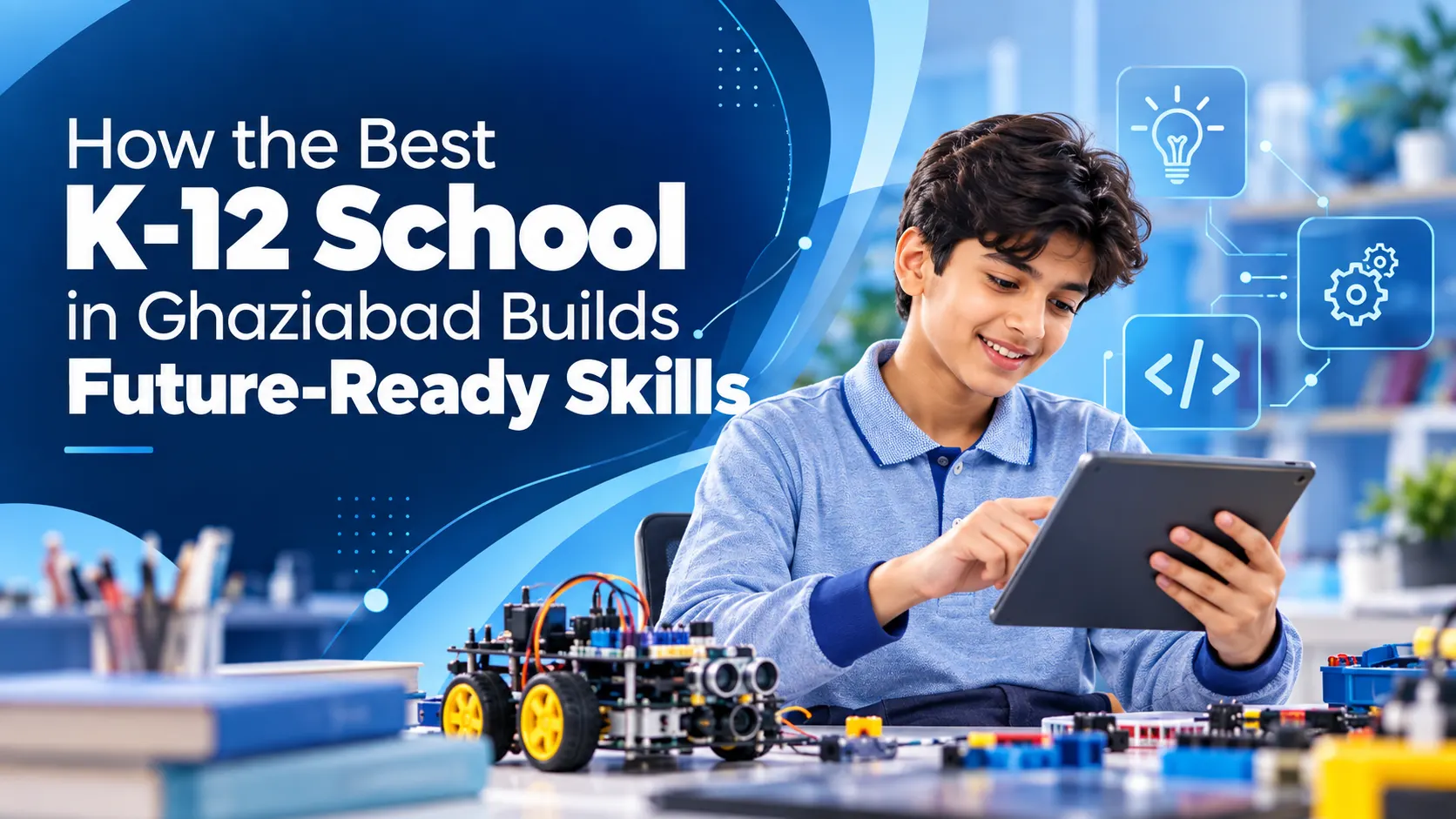
A best K-12 school in Ghaziabad that recognises this is not offering coding as an extracurricular. It is building digital thinking into the curriculum itself.
How do K-12 Schools Prepare Students for Future Careers?
If you have been wondering what digital skills children should learn in school and how a K-12 school develop future innovators, here’s the answer:
Coding from Class 3: Why Early Is Not Too Early
The question we hear most from parents new to this idea is: why so young? The answer is not about producing software engineers from primary school. It is about something more fundamental. Coding teaches a child to think in a specific way: breaking a large problem into smaller, manageable steps, testing a solution, identifying where it failed and adjusting. This is not a technical skill exclusive to programming. It is a thinking pattern that transfers across every academic subject and every real-world challenge a child will ever face.
At Allenhouse, our students begin coding from Class 3 through visual programming tools like Scratch, which introduces logic and sequence through drag-and-drop interfaces that feel like play and produce genuine computational thinking.
By Class 5, students are building interactive projects and understanding the relationship between inputs, conditions and outputs
By Class 7, they are writing structured programmes in Python, working with data and solving problems that require genuine logical planning
By Class 9 and beyond, students are engaging with AI concepts, machine learning basics and application development
The progression is deliberate. By the time a student reaches board examination years, coding is not a new subject they are managing alongside everything else. It is a familiar mode of thinking they have been developing for years.
AI Literacy: Understanding the Tool Before It Uses You
Artificial intelligence is already embedded in the daily lives of every student in Ghaziabad, in the recommendations they receive, the searches they conduct, the social media feeds that shape their understanding of the world. The question is not whether students will encounter AI. It is whether they will understand it well enough to use it critically rather than be shaped by it passively.
At Allenhouse, our AI literacy programme for students from Class 6 onwards covers three interconnected areas:
How AI works- Students learn the conceptual foundations: what training data is, how pattern recognition produces recommendations, why AI systems make the errors they make. This demystification is the first step toward confident, critical engagement.
Where AI is applied- From healthcare diagnostics to agricultural monitoring to creative tools, students explore real-world applications across sectors. This breadth ensures that AI is not understood as a technology belonging only to computer science, but as a capability reshaping every field they might enter.
Ethical and responsible use- Bias in algorithms, privacy implications, the difference between AI-generated and human-created content, the question of accountability when AI systems cause harm.
The Robotics Lab: Where Digital Skills Become Physical Reality
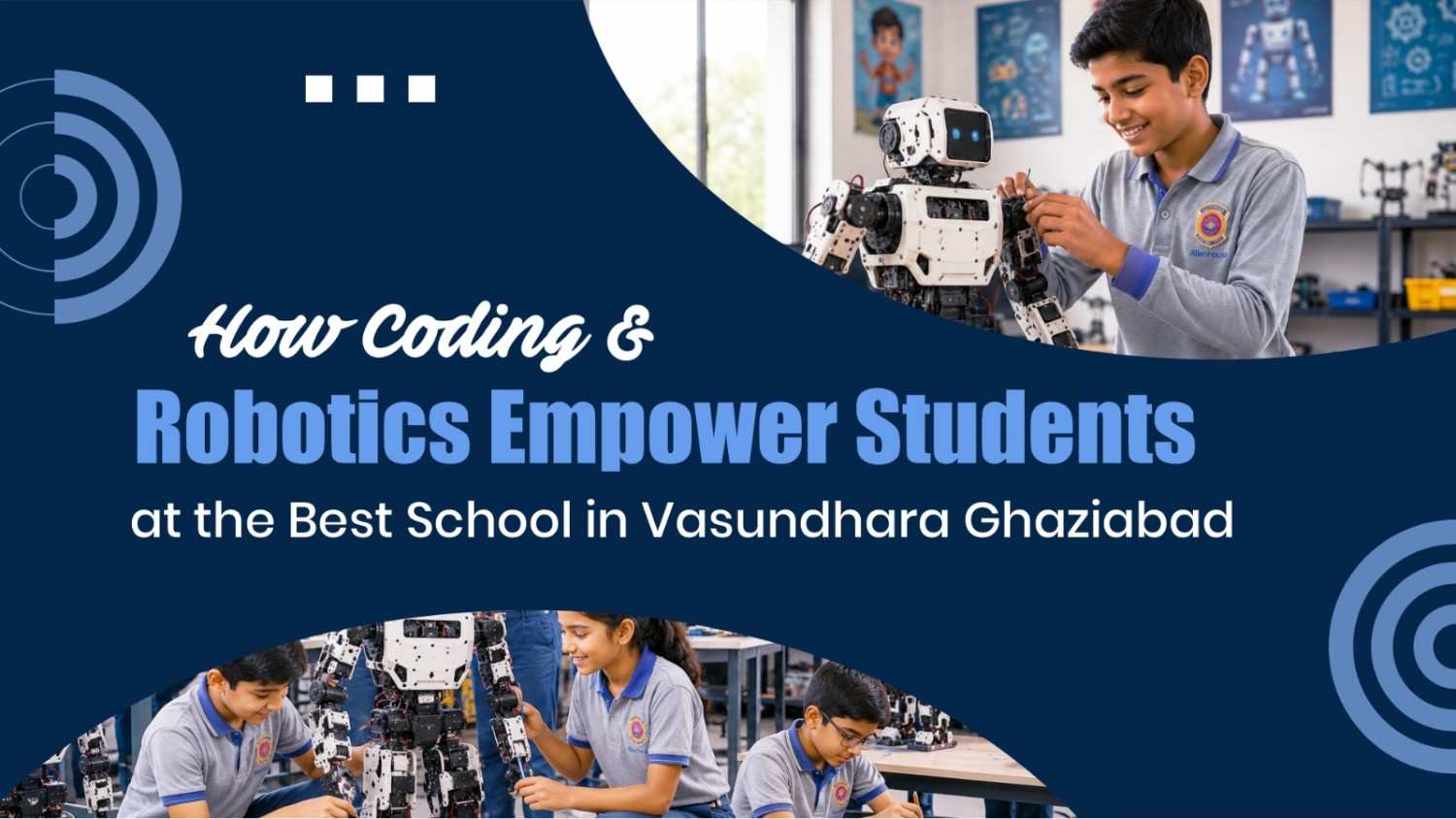
There is a particular moment that happens in our robotics lab at Allenhouse. A student has been working on a programme for forty minutes. The robot has not done what they wanted. They make one final adjustment, the robot completes the task and the expression on their face is not relief. It is something closer to ownership. That ownership, the feeling of having built something that works, is what the robotics lab exists to produce.
Students work with age-appropriate robotics kits that increase in complexity across class levels
Challenges are designed around real-world problems: navigating an obstacle course, sorting objects by sensor, responding to environmental inputs
Teams work collaboratively, distributing tasks and integrating their work, which develops the project management and communication skills that technical ability alone does not produce
The annual Tech Fest gives students a public platform to present what they have built, adding the accountability of an audience to the satisfaction of completion
STEM Education: Why Hands-On Beats Theoretical Every Time
STEM education, the integration of Science, Technology, Engineering and Mathematics, has been a phrase in Indian education for over a decade. The schools that have made it mean something are the ones that moved beyond the label into the practice.
At Allenhouse, STEM is not a subject. It is a methodology applied across subjects.
Science labs for Physics, Chemistry, Biology and Mathematics are fully equipped and used regularly across class levels, not reserved for board year practicals
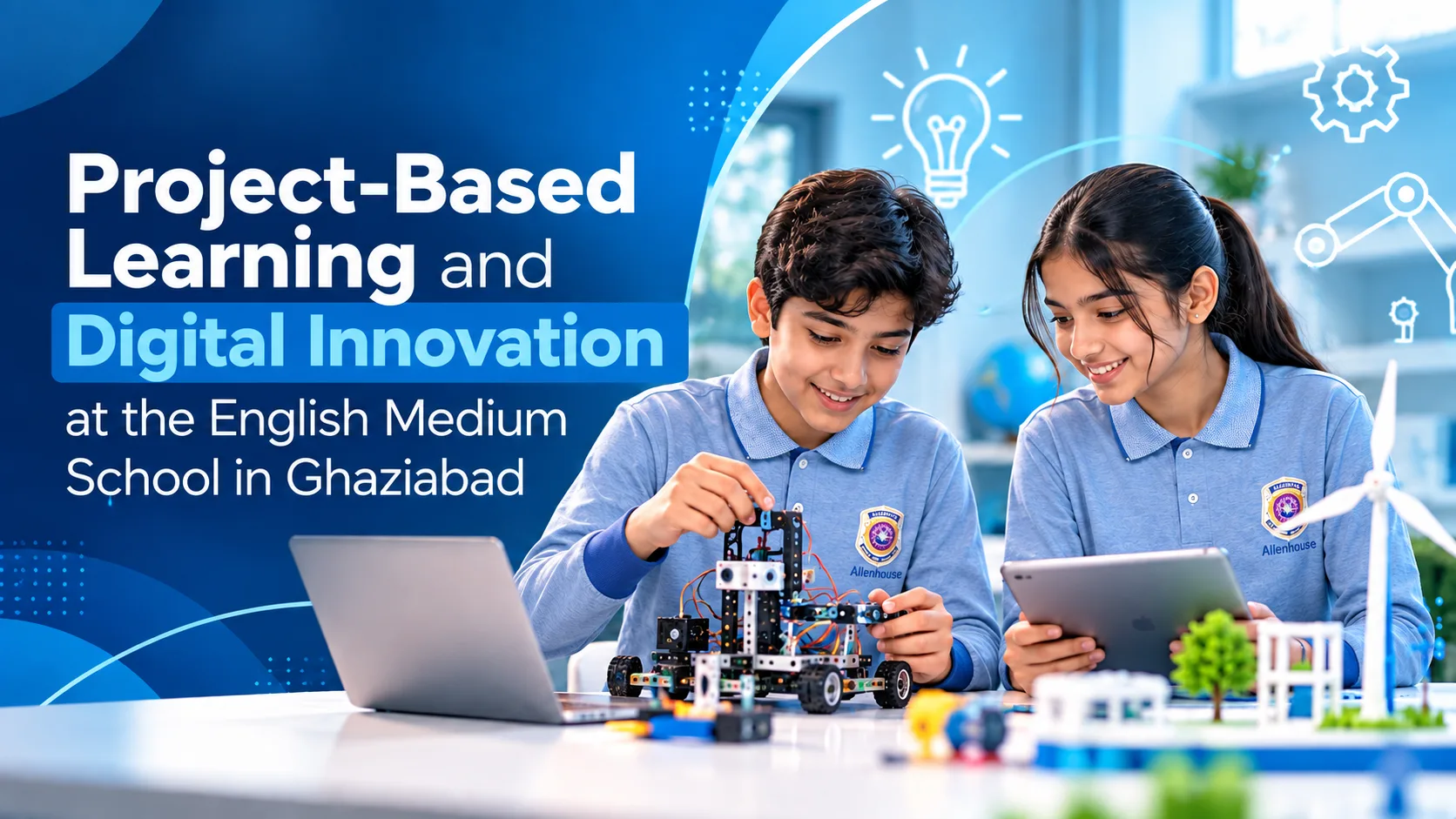
Project-based STEM assignments require students to identify a problem, design a solution, build a prototype, test it and present their findings — the complete innovation cycle, not just the interesting parts
Cross-subject integration means a student studying environmental science might build a data collection tool in the coding lab and present their findings using animation
Innovation challenges give students problems without pre-determined solutions, which is the closest school can get to preparing students for real-world complexity
Digital Literacy: Teaching Students to Think, Not Just Browse
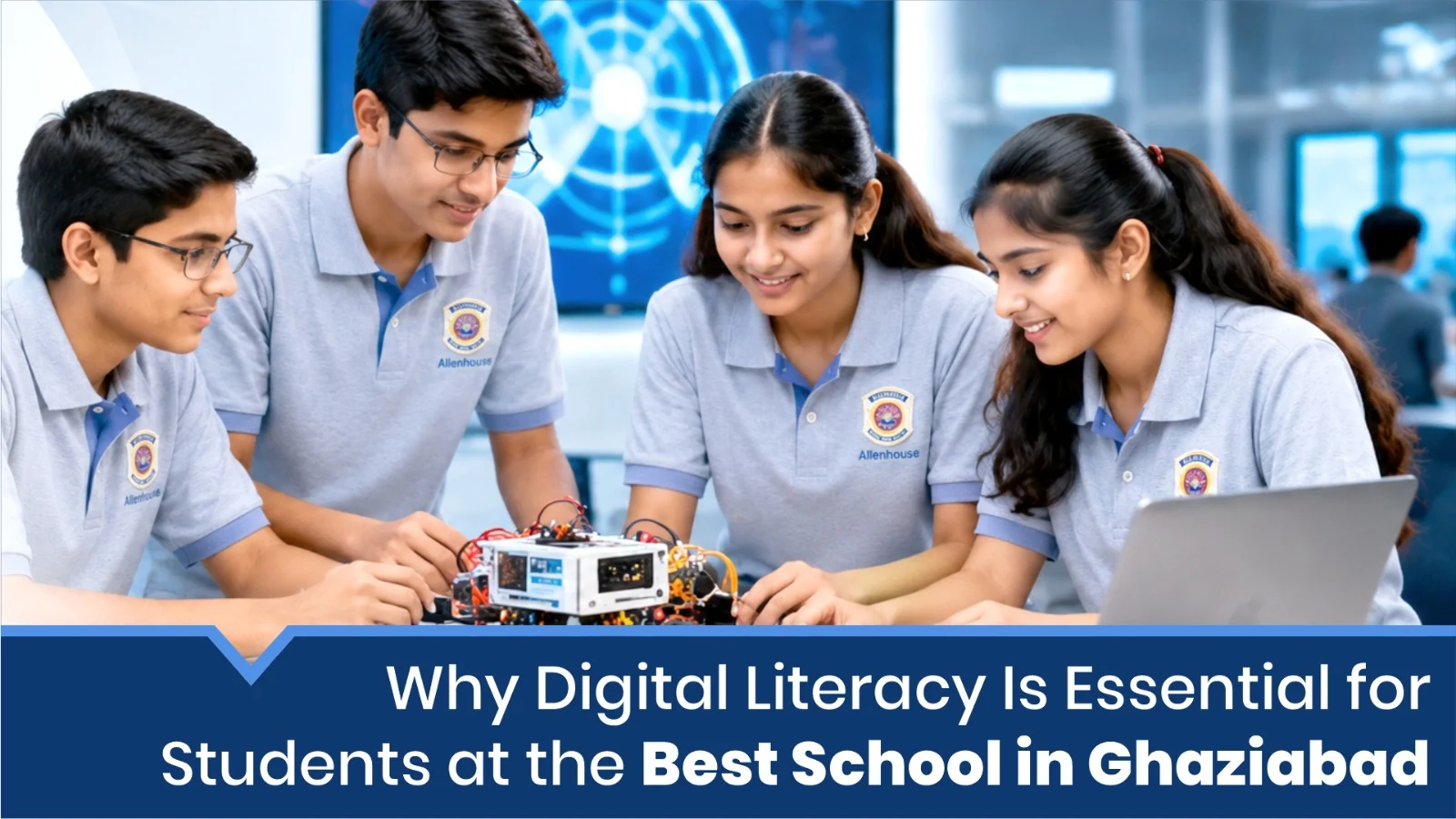
Digital literacy is broader than coding and more fundamental than knowing how to use specific applications. It is the ability to find, evaluate, create and communicate information in digital environments and to do all of this with genuine critical awareness.
At Allenhouse, digital literacy is woven across the curriculum rather than siloed into a single subject.
Information evaluation is taught explicitly. Students learn to distinguish between reliable and unreliable sources, to trace claims to their origin and to recognise the difference between what something says and what it means
Cyber safety education gives students practical frameworks for protecting their own information, recognising online risks and responding to digital threats, age-appropriate from primary levels through to senior secondary
Responsible digital communication is addressed through classroom discussion and through the school's own communication culture, which models the kind of thoughtful, purposeful digital interaction we are trying to develop
Creative digital production, including animation, digital design and multimedia presentation, gives students experience as creators rather than only consumers of digital content
What Makes Allenhouse Different From a Traditional School
The difference is not one feature. It is a coherent philosophy applied consistently across every level from Pre-Nursery through Class 12.
The 100% board pass rate at Allenhouse, with strong high-distinction percentages, is not the result of examination coaching. It is the downstream product of a curriculum that builds genuine understanding across twelve years rather than preparing students for a specific paper format.
Conclusion
A future innovator is not made by a single programme or a single lab. They are made by twelve years of consistent, coherent education that treats digital thinking as fundamental rather than supplementary, that builds the habit of creating rather than only consuming and that develops the critical awareness to navigate a complex world rather than simply participate in it.
At Allenhouse Public School, Vasundhara, the best K-12 school in Ghaziabad, this is not a vision for what the school will become. It is a description of what it already does, every day, from Class 3 coding to Class 12 board preparation, across a campus that was built to produce graduates ready for a world that has not finished changing yet.
Your Queries Answered
1.What digital skills do students learn at Allenhouse Ghaziabad?
Students learn coding, AI literacy, robotics, animation, digital design, cyber safety and digital citizenship. These skills are integrated with academics through a STEAM-based curriculum across K-12.
2.Why should children learn coding from an early age?
Coding develops problem-solving, logical thinking, creativity and computational skills. Learning it early helps children build confidence with technology and prepares them for future academic and career opportunities.
3.What is the fee structure of CBSE schools in Ghaziabad?
The fee structure varies by class level and covers academics, smart classrooms, labs, programmes and other learning resources. Parents should contact the school for the latest fee details.
4.What is the admission process at Allenhouse Ghaziabad?
The admission process includes an enquiry, application submission, a student interaction or assessment and fee confirmation. Parents are encouraged to visit the campus and speak with the admissions team before applying.
6.What makes Allenhouse Ghaziabad a future-ready K-12 school?
Allenhouse is among the best K-12 schools in Ghaziabad as it combines strong academics with coding, AI, robotics, STEAM learning and personalised attention. This approach helps students develop the knowledge and skills needed for higher education and future careers.