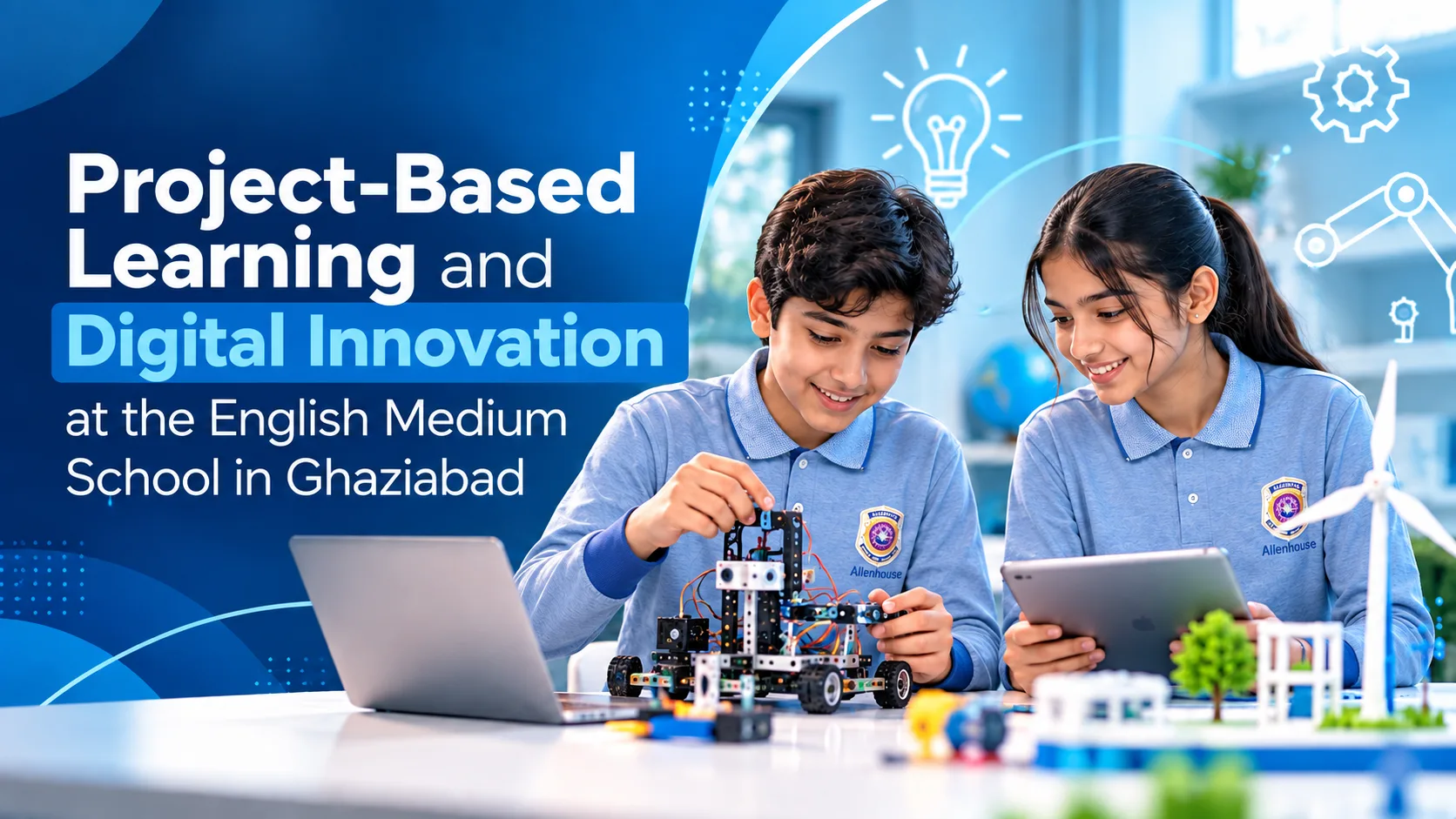
Project-Based Learning and Digital Innovation at an English Medium School in Ghaziabad
Knowledge and information are not only to be memorised. The student must know how to apply them and do something with them. That is project-based learning. At the best English medium schools in Ghaziabad it fosters experiential and digital learning too. Here, projects are the primary vehicle through which students develop the thinking, collaboration and innovation skills that define genuine education.
Introduction
There is a telling difference between two kinds of students. The first can tell you the water cycle. They have memorised the stages. This student ticks all the boxes, as in correctly labelling a diagram and reproducing the answer accurately in an exam. The second builds a working model. This model of theirs demonstrates the water cycle. The student identifies a problem and designs something to solve it. They present their findings to an audience. Moreover, they adjust their design when the first version does not perform as expected. Ask them six months later and they will still remember the details because they lived it.
Simply put, project-based learning produces the second student. At Allenhouse Public School, Vasundhara, one of the top CBSE schools in Vasundhara, Ghaziabad, it is built into the curriculum across every class level. This blog covers what project-based learning actually is and why the combination is one of the most powerful things an English medium school in Ghaziabadcan offer its students.
What is Project-Based Learning?
Project-based learning (PBL) is a teaching methodology wherein students gain knowledge and skills by working to investigate and respond to an authentic, engaging and complex question/problem/challenge.
It is worth noting that a project that involves decorating a poster about a topic is not project-based learning. These are mostly art activities with academic content. A project requires students to identify a real problem. They research it. Design a potential solution. Build a prototype. They then test it against real criteria, present their findings and incorporate feedback into a revised version. This is project-based learning. The distinction is in whether the project demands genuine thinking, genuine decision-making and genuine ownership.
How Project-Based Learning Differs From Traditional Teaching
Traditional teaching is designed around content delivery: a teacher presents information, students receive and practice it, an assessment measures how much was retained. It is efficient for certain kinds of knowledge transfer and genuinely limited for developing the skills that complex problems require.
Project-based learning is designed around knowledge application: students encounter a challenge that requires content knowledge to solve, acquire that knowledge in the context of needing it and apply it immediately to something real. The content is the same. What changes is the relationship between the student and the knowledge.
How Digital Innovation Extends What Projects Can Achieve
Project-based learning existed before digital tools. What digital innovation does is dramatically expand the complexity, reach and sophistication of what students can build, investigate and present. At good English medium schools in Ghaziabad, such as Allenhouse, digital tools are integrated into the project cycle at every stage.
Research and Investigation
Students use digital databases, cloud-based research tools and curated online resources to investigate their project questions.
Digital literacy, the ability to find, evaluate and use information critically, is developed through this process across every project.
Design and Prototyping
Digital design tools allow students to move from a sketch to a working prototype with a speed and precision that physical materials alone cannot match.
A student designing a product for a business project can mock it up digitally, test it virtually and adjust it before committing to physical construction.
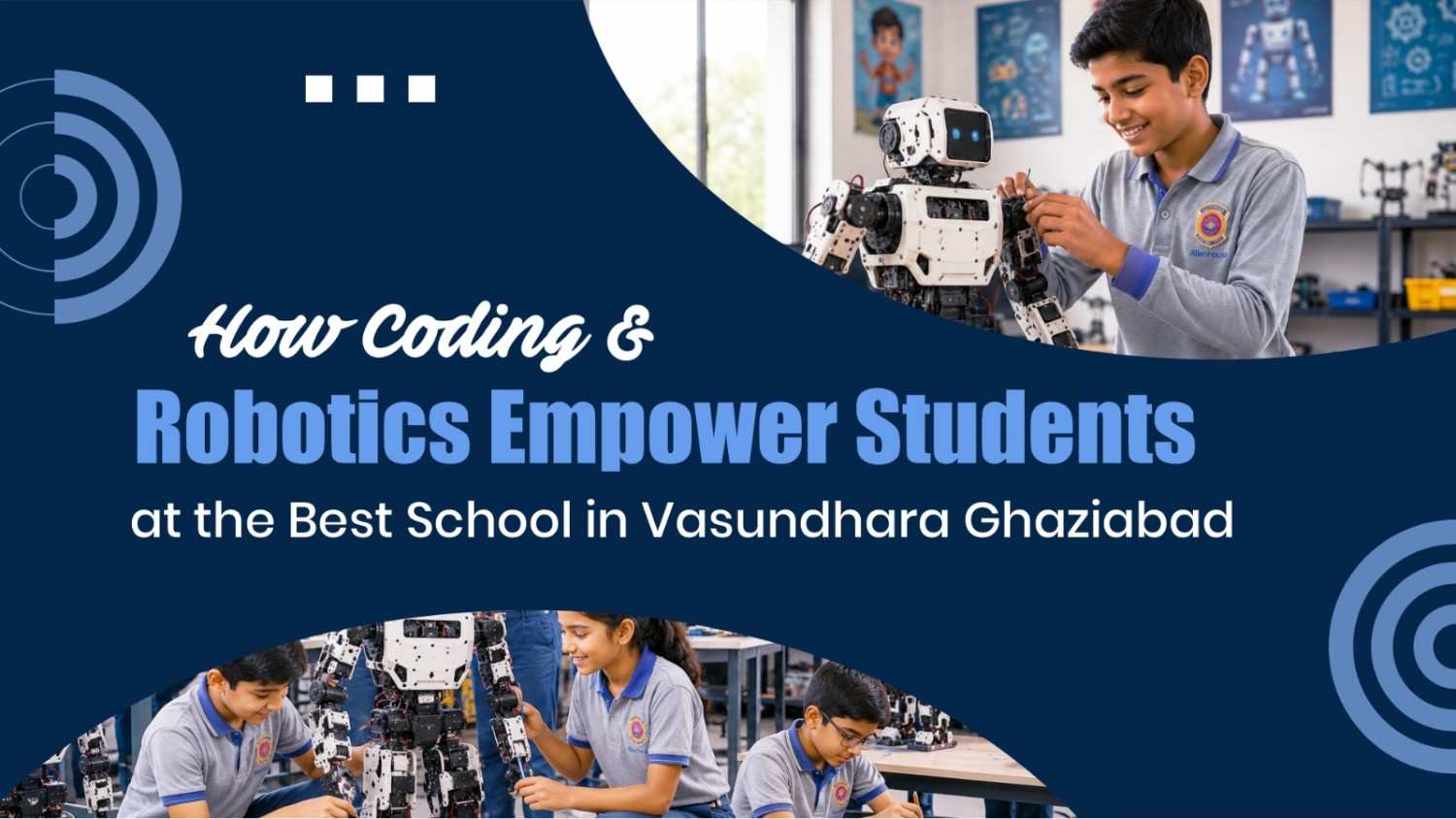
Coding and Robotics Integration
A student building a solution to an environmental monitoring problem might write code to collect sensor data.
A student investigating traffic patterns might build a small model with programmable movement. The project requires coding. The coding serves the project. Both are better for the connection.
Presentation and Communication
Animation, data visualisation, video documentation and interactive presentations all give students the opportunity to develop digital communication skills alongside their project content.
Collaboration Across the Classroom
Cloud-based collaboration tools mean that project groups can work on shared documents, presentations and databases simultaneously.
They develop the digital collaboration skills that professional environments increasingly expect.
The Innovation Hub at Allenhouse: Projects Turn into Inventions
Being a top CBSE School in Vasundhara Ghaziabad, at Allenhouse, the Innovation Hub is where project-based learning reaches its most ambitious form. Students bring problems here. They use the available tools, coding workstations, robotics kits, design software, prototyping materials, to build responses to those problems. Teachers are present as guides rather than instructors, asking questions that push thinking further without directing it toward a predetermined answer.
The design thinking process that structures Innovation Hub work moves through five stages that students learn to navigate explicitly:
Empathise: understand the problem from the perspective of the people it affects
Define: articulate the problem precisely enough that a solution can be designed
Ideate: generate a wide range of possible approaches before committing to one
Prototype: build a version of the solution quickly enough to test it
Test: evaluate against real criteria and feed findings back into the design
This process is not limited to the Innovation Hub. Students who have learned to think this way bring it to every project they undertake across every subject.
What Skills Project-Based Learning Develops
At an English medium school in Ghaziabad, project-based learning is strategically incorporated because it develops the following key skills:
Critical Thinking: A project without a predetermined answer requires students to evaluate options, weigh evidence and defend choices. This is critical thinking in its most practical form.
Problem-Solving: Every project encounters problems. The research reveals a complexity that complicates the initial approach. A collaborator disagrees about the direction. Students who work through these problems develop resilience and adaptability.
Communication: Students need to communicate at every stage: explaining their approach to teammates or presenting findings to an audience, writing up their process for evaluation and defending their decisions under questioning.
Collaboration: Working on a team project with a real deadline and a real audience teaches students things about collaboration. They learn distributing tasks and managing disagreement as well as integrating different people's work.
Leadership: Within every project group, leadership emerges. Students take initiative, coordinate others, and make decisions under uncertainty; they are developing leadership capacity
Digital Literacy: Every digitally integrated project develops the broader digital literacy skills: information evaluation, digital communication, responsible data use and critical engagement with technology tools.
Project-Based Learning Across Class Levels at Allenhouse
The complexity and autonomy of projects is calibrated to developmental stages across the school.
How Teachers Guide Through Project Based Learning
In project-based learning, teachers do not simply deliver answers. They are not directing students all the time. They guide students through the learning process. They allow asking thought-provoking questions, providing support when needed and encouraging independent problem-solving.
At an English medium school in Ghaziabad, such as Allenhouse, teachers are trained to facilitate PBL by:
Guiding inquiry instead of giving ready-made solutions
Supporting research, collaboration and critical thinking
Encouraging students to learn from challenges and mistakes
Assessing both the learning journey and the final outcome
Rather than focusing only on grades, assessment considers research, teamwork, creativity, presentation and reflection, giving a more holistic view of each student's growth.
Conclusion
Project-based learning and digital innovation at an English medium school in Ghaziabad are the pedagogical infrastructure. A student who has spent 12 good years at the best school in Ghaziabad regularly building, investigating, failing, adjusting and presenting arrives at higher education and professional environments with a different relationship to challenge than one who has only been assessed on what they can remember. They do not wait to be told what to do. They identify a problem, design an approach and begin.
At Allenhouse Public School, Vasundhara, a top CBSE school in Vasundhara Ghaziabad, this infrastructure is built into every year of the K-12 journey, connected to our coding and robotics programme, our Innovation Hub, our digital literacy curriculum and the annual Tech Fest where students demonstrate what they have built. The students who come through this programme are not just well-prepared for examinations. They are prepared for everything that examinations are supposed to be preparing them for.
Your Queries Answered
1.How do top CBSE schools implement project-based learning?
Top CBSE schools integrate project-based learning across subjects through research, teamwork, problem-solving and presentations. Students apply classroom concepts to real-world projects using technology, labs and creative activities.
2.How does digital innovation enhance project-based learning?
Digital tools such as coding platforms, robotics kits, design software and interactive learning resources help students research, create, test and present projects more effectively. This builds both subject knowledge and digital skills.
3.What future-ready skills does project-based learning develop?
Project-based learning develops critical thinking, creativity, communication, collaboration, leadership, problem-solving and digital literacy. These skills prepare students for higher education and future careers.
4.How does the Innovation Lab at Allenhouse support project-based learning?
The Innovation Lab provides students with coding tools, robotics kits, design software and hands-on learning resources to build, test and refine projects. It encourages innovation, teamwork and practical problem-solving.
5.Why should parents choose a school with project-based learning?
Project-based learning helps students apply knowledge in real-life situations, improves confidence, strengthens problem-solving abilities and develops essential life and career skills alongside academic achievement.