How an English Medium School in Ghaziabad Prepares Students for Global Careers Through Strong Communication Skills
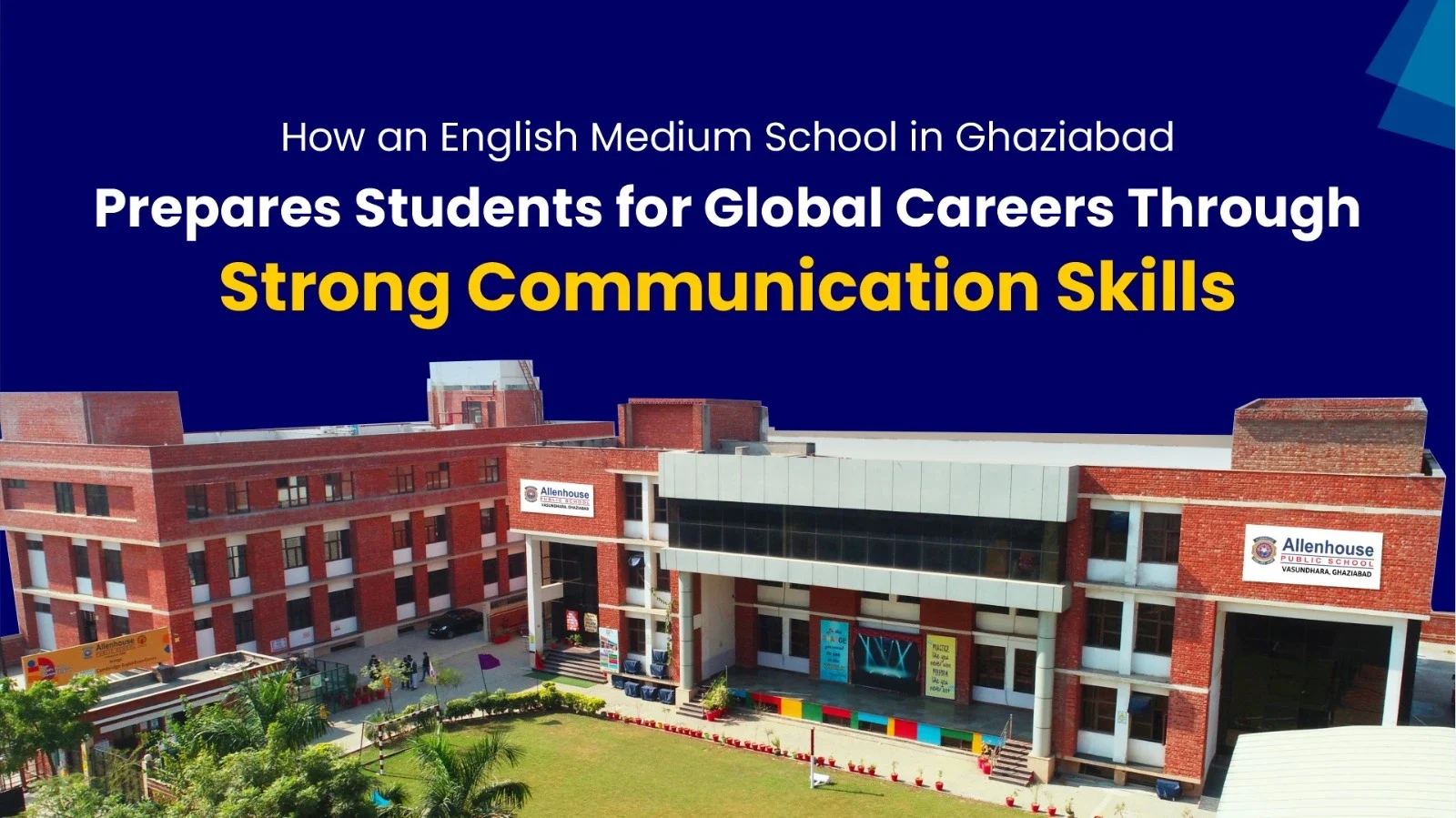
Communication is more than language fluency. An English medium school in Ghaziabad helps students build strong communication skills. Through interactive classrooms, reading programs, debates, and presentations, students learn to express ideas clearly and confidently. This foundation prepares them for global careers and life ahead.
Picture this: two equally talented students. Both score well in exams. Both understand concepts clearly. However, when it’s time to present an idea, one student speaks with confidence. The other hesitates. Who stands out? The answer is clear!
In today’s world, knowledge opens doors. Communication decides how far you walk through them. That is why the role of an English medium school in Ghaziabad is becoming more important than ever. They make it a point to build students who can express ideas clearly, collaborate globally, and think independently.
Communication Skills Are Now a Core Career Skill
We are in an era dominated by AI and tech. There are a multitude of things that AI can do, but there are tasks that demand unique human skills. Reports by LinkedIn Global Talent Trends consistently rank communication among the top skills employers look for. Why? Because every profession now demands it.
Engineers present ideas.
Doctors explain treatments.
Entrepreneurs pitch innovations.
Researchers publish findings.
Technical knowledge is essential but without communication, knowledge often stays invisible. Schools that recognise this early help students develop an advantage that lasts far beyond classrooms.
Why English Medium Education Matters in Schools
First things first, English is a language like any other language. The mere knowledge of this language or the ability to speak in it does not add value. So, what makes it different, and why are we particularly talking about it?
English today functions as the common academic and professional language across the world. According to Britannica, over 1.5 billion people use English either as a first or second language. Thus, it is the most widely used language in higher education, research, and international business. For students, this has practical implications:
Most higher education programs use English as the medium of instruction
International collaborations rely on English communication
Research, technology, and innovation platforms operate largely in English
An English medium school in Ghaziabad, therefore, gives students exposure to a language environment that prepares them for global academic and professional opportunities. However, the goal is not just fluency. The real goal is effective expression.
Communication Is More Than Speaking English
Many people think communication skills mean “good English”. That’s only part of the picture. True communication includes:
Listening carefully
Organising thoughts logically
Presenting ideas confidently
Writing clearly
Participating in discussions
A strong school environment encourages all of these. Students learn how to:
Explain concepts.
Debate viewpoints.
Write structured answers.
Present ideas before an audience.
These skills gradually turn shy learners into confident communicators.
The Approach of English Medium School in Ghaziabad To Building Stronger Communication Skills
Schools in Ghaziabad adopt the following practices to boost quality of education:
Classroom Learning That Encourages Expression
Traditional classrooms often focused on passive learning. Students listened while teachers spoke. Modern learning environments are different. At APS, classrooms are becoming more interactive. Teachers encourage students to:
Ask questions
Participate in discussions
Explain answers
Present projects
This approach builds confidence early. When students regularly speak in class, communication becomes natural.
The Role of Reading in Language Development
Reading quietly shapes communication ability. Students who read regularly develop:
Better vocabulary
Stronger comprehension
Clearer sentence structure
Better writing skills
Research shows that regular reading significantly improves language fluency and critical thinking ability among school students. That’s why our school emphasise reading programs, library engagement, and literature exposure. Reading expands thought, and better thinking leads to better expression.
Debates and Public Speaking
Confidence grows quietly through practice. Activities such as debates, storytelling, presentations, and stage performances help students overcome hesitation. These experiences teach students how to:
Organise arguments
Think quickly
Respond to questions
Speak before an audience
At first, students may feel nervous. But over time, these activities build confidence that becomes visible in classrooms, competitions, and future interviews.
Writing Skills: The Quiet Power Behind Communication
Speaking is visible. Writing is equally important. Students today need to communicate through:
Essays
Reports
Emails
Research assignments
Digital communication platforms
This means writing has to be clear and purposeful. Strong writing skills help students present ideas logically, explain arguments and share information without confusion. Over time, writing stops being just a school task. It becomes one of the most powerful academic and professional skills a student can develop.
Exposure Builds Confidence
Students interact with different environments. Be it inter-school competitions or collaborative projects, they expose students to new audiences. This exposure teaches students how to:
Adapt communication styles
Work in teams
Present ideas confidently
Engage with diverse perspectives
Students who experience such opportunities develop both communication skills and leadership ability.
Preparing Students for a Global Future
The workplace your child enters tomorrow will look very different from the one we know today.
Teams are increasingly global.
Work happens across time zones.
Communication happens across cultures.
Students who develop strong communication skills early are better prepared to thrive in such environments. They can:
Present ideas clearly
Collaborate with diverse teams
Express innovative solutions
Represent their work confidently
These abilities transform education into opportunity.
Building Confident Communicators at Allenhouse Public School, Ghaziabad
At APS, Ghaziabad, we believe education should empower students to communicate with clarity and purpose. As a leading CBSE affiliated school in Ghaziabad, our approach focuses on:
- Interactive classrooms that encourage participation
- Reading and language development programs
- Debates, presentations, and public speaking opportunities
- Structured writing and communication practice
- Exposure to cultural and academic platforms
Our goal is simple: To help students not only learn but also express what they know with confidence. Because knowledge creates potential. Communication turns that potential into achievement.
If you are exploring private schools in Ghaziabad that prioritise both academic excellence and real-world skills, we invite you to discover the learning environment at Allenhouse Public School.
Admissions are now open. Enquire Today
Your Queries Answered
1.Why is communication important for students today?
Ideas are everywhere, but ideas only matter when they are understood. Students today don’t just study. They present, collaborate and explain. Be it class discussions, group projects, competitions or interviews, all of these require clear communication.
A student who can organise thoughts and express them confidently often stands out because they can share what they know better. Strong communication also builds listening skills, teamwork, and confidence. These skills travel far beyond the classroom.
2. How does an English Medium School in Ghaziabad help students build communication skills?
Language improves with the environment. In an English medium school, students read, write, listen, and speak in English every day. That constant exposure makes the language natural, not intimidating. Gradually, students begin to:
form clearer sentences
expand vocabulary
participate in discussions
present ideas confidently
Over time, communication stops being a classroom task. It becomes a comfortable habit.
3. Do communication skills really influence career success?
Very much. Across industries, employers consistently rank communication among the most important professional skills. Why? Because workplaces run on ideas and collaboration. Employees must explain concepts, discuss solutions, write reports, and present strategies. Those who communicate clearly often gain more visibility and leadership opportunities. Technical knowledge opens doors. Communication helps people walk through them and move ahead.
4. How do schools develop communication skills?
Communication improves with practice. For instance, debates sharpen arguments and presentations build confidence. Theatre improves expression and storytelling develops creativity. Furthermore, group discussions encourage listening and collaboration. Each activity pushes students slightly outside their comfort zone and strengthens their skills.
5. Why should parents consider private schools in Ghaziabad that emphasise communication?
Parents should choose private schools in Ghaziabad because academics alone are no longer enough. When you pick the leading CBSE affiliated school in Ghaziabad for your child, their modern education requires students to think clearly and express ideas confidently. Schools that emphasise communication help students develop:
strong language skills
presentation ability
confidence in discussions
leadership qualities
These abilities matter during higher education, competitive exams, interviews, and professional life.