How a Top-Rated CBSE School in Ghaziabad Prepares Students for the Digital Age
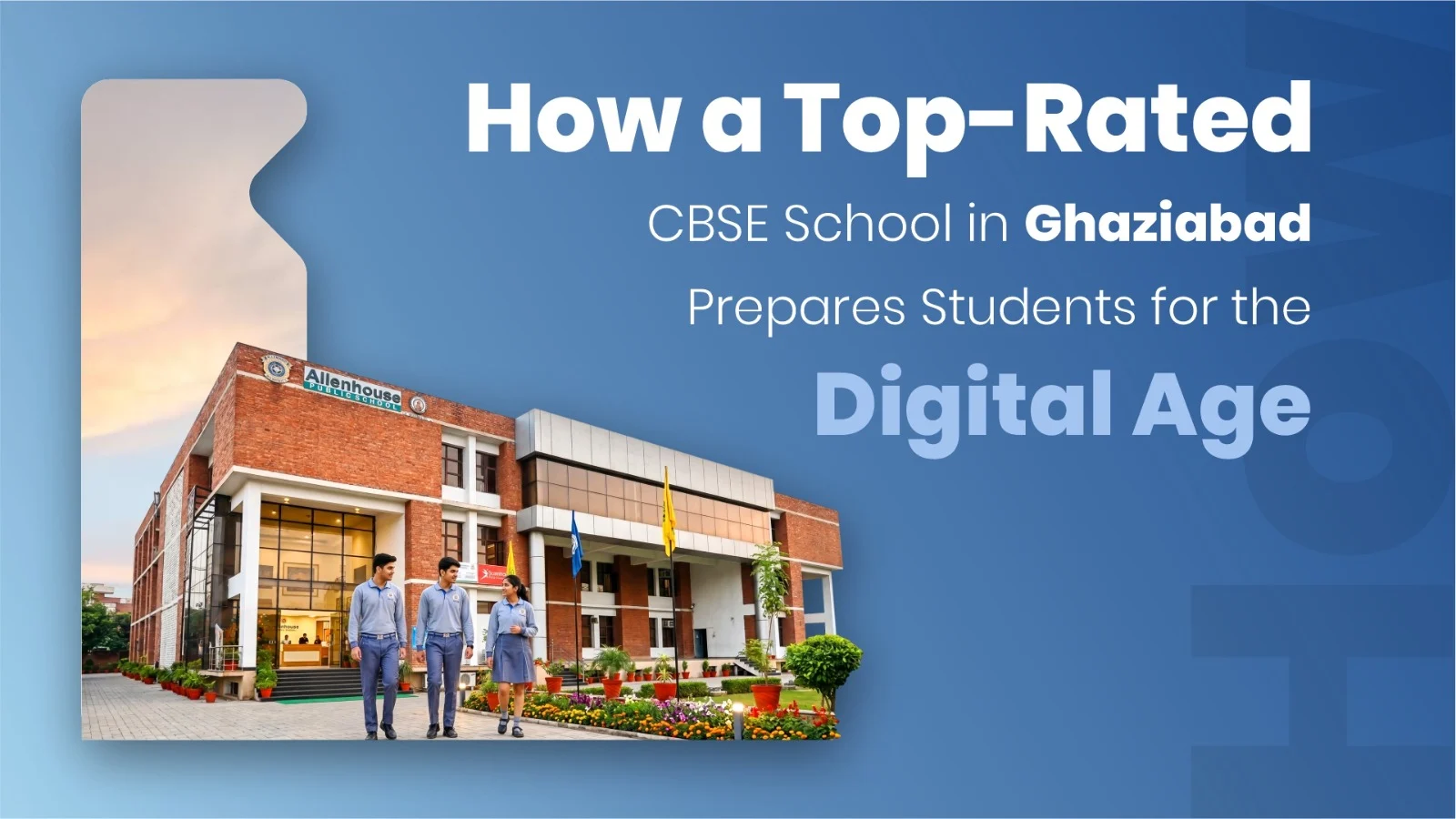
The digital age is not coming. It is here. And the best CBSE schools in Ghaziabad prepare students for it by integrating technology into daily academics, emphasising STEAM (Science, Technology, Engineering, Arts, Mathematics) learning and fostering critical digital citizenship. Learn how Allenhouse ensures the best prep for every child who goes through it.
Introduction
What digital age readiness actually means? Does it mean your child can use a smartphone? Or is it that they have sat through a few coding classes? No, it’s neither. It does not even mean the school has smart boards in every classroom. And it definitely does not mean the prospectus has photographs of children wearing headsets and looking thoughtfully at screens.
Real digital age readiness means a child can think computationally and can break a complex problem into logical steps and work through it systematically. They must hold the capability to create something with technology, not just consume it. And these capabilities are not built through occasional exposure. They are built through deliberate, progressive, embedded education that treats digital fluency as seriously as literacy and numeracy. Allenhouse Public School Ghaziabad is doing this. As a top-rated CBSE school in Ghaziabad that has invested genuinely in preparing students for the world that actually exists, we have built something that most schools in the city are still planning. This blog explains what that looks like and why it matters.
Why Digital Age Preparation Cannot Be an Afterthought at a Top-Rated CBSE School in Ghaziabad
Here is the honest picture of where India's workforce is heading.
- The World Economic Forum estimates that 65% of children entering primary school today will work in jobs that do not yet exist.
- Artificial intelligence, automation and digital transformation are reshaping every industry.
- Healthcare, finance, law, design, agriculture, manufacturing and every other field are being restructured around digital capabilities.
The students who will thrive in this environment are not necessarily the ones who scored highest in board examinations. They are the ones who can think analytically, create digitally, adapt continuously and solve problems that have no precedent.
A school that teaches the CBSE curriculum excellently but ignores this reality is preparing students for a world that is already changing under their feet. A leading private school in Ghaziabad that takes both seriously, i.e., academic rigour and genuine digital preparation, is giving students a foundation that compounds in value across every decade of their professional life. Allenhouse Ghaziabad has built the second kind of school. Here is how.
6 Ways Allenhouse Ghaziabad Prepares Students for the Digital Age
To ensure every student is geared for the digital age, here is what Allenhouse does:
1. Coding Education That Builds the Thinking Skills the Digital Age Demands
The most important thing coding teaches is not how to write programmes. It is how to think precisely about problems. When a student writes code, they are forced to be exact, to say what they mean, mean what they say and discover immediately when they have done neither. That discipline, applied consistently across years of progressive coding education, builds a cognitive framework that transfers to every domain where clear thinking matters.
At Allenhouse Ghaziabad, coding is introduced progressively across school years as a foundational thinking skill rather than a technical elective. Students move from logical thinking activities in early years to real programming languages and project-based work in senior school.
Progressive coding curriculum developing computational thinking from early years rather than introducing it as a late-stage subject
Real programming languages and project work in senior years producing demonstrable technical capability
Debugging practice developing the iterative problem-solving mindset that professional environments consistently reward
Computational thinking improving performance across mathematics, science and analytical reasoning simultaneously
2. Animation Education That is More Than a Creative Activity
Most people hear animation and think of artistic hobbies. That is a significant underestimation of what animation education actually develops. Animation requires students to think visually, understand how ideas are communicated through movement, timing, composition and sequence. It requires design thinking, i.e., the ability to make decisions that are simultaneously aesthetic and functional. It requires technical proficiency with digital tools that are used by professionals across film, gaming, product design, marketing and digital media.
As a top-rated CBSE school in Ghaziabad, at Allenhouse we ensure that the animation programme uses industry-relevant software and develops both creative confidence and technical digital fluency simultaneously. A student who has learned to animate has developed capabilities that sit at the most valuable intersection of the digital economy: technical proficiency combined with creative originality.
Industry-relevant animation tools developing technical digital proficiency alongside creative design thinking
Visual storytelling and composition skills building the communication capability that digital environments demand
Animation projects requiring students to connect computational logic to creative outcomes, naturally blending both disciplines
Students build a genuine portfolio of digital creative work across the animation curriculum
3. Robotics That Prepares Students for an Automated World
Automation is not a future concern. It is the present reality of every major industry. And the students who will navigate an automated world most effectively are not those who fear robots, they are those who understand how they work, because they have built them.
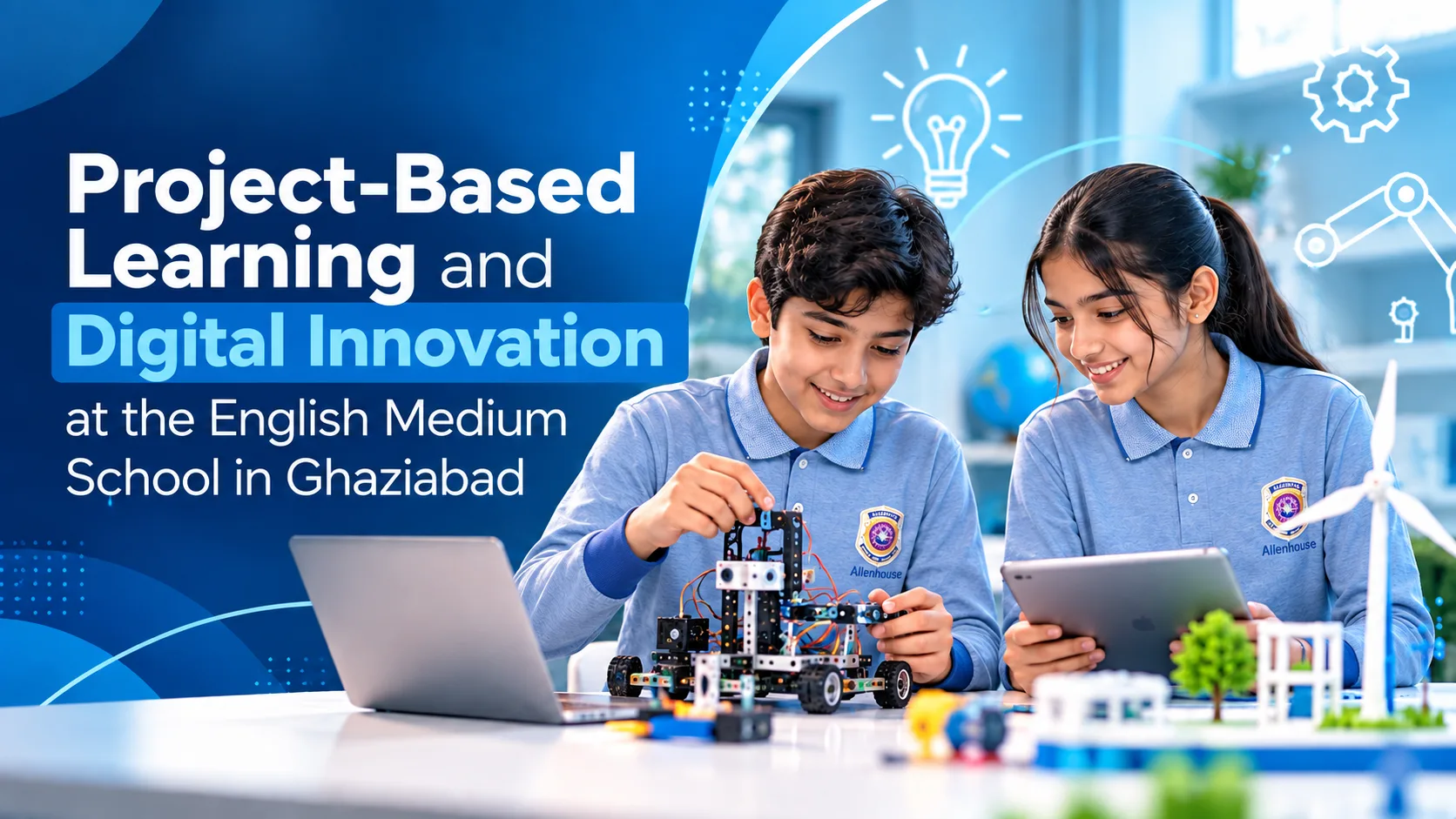
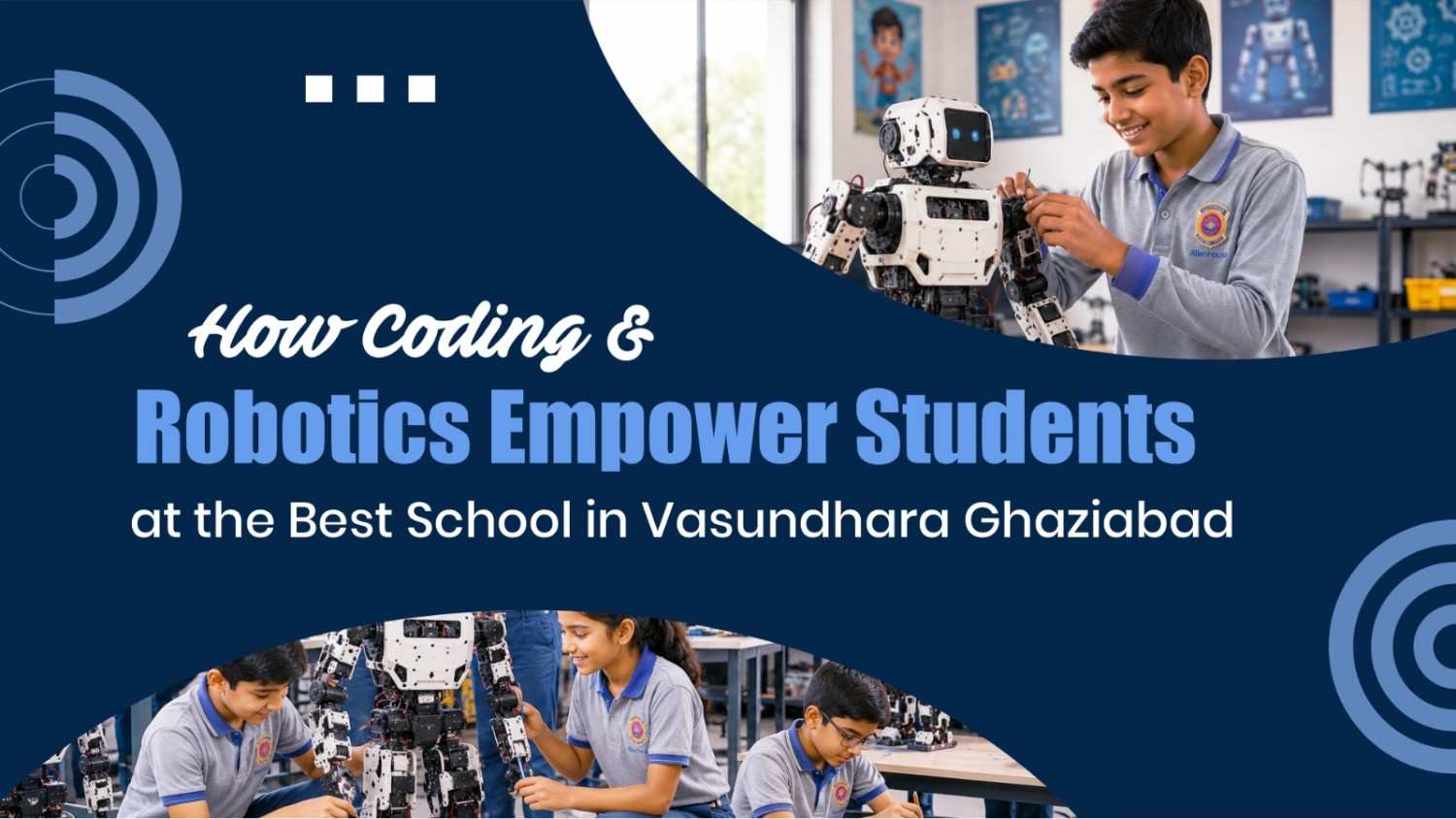
The Robotics programme at Allenhouse Ghaziabad gives students exactly this. They build functional robots, write the code that controls them and experience the engineering design cycle (conceive, build, test, fail, diagnose, improve) repeatedly and progressively. This process produces something that classroom instruction rarely can, i.e., genuine comfort with technical complexity. It also gives the specific resilience that comes from making something work through iteration rather than through finding the right answer.
Students build and programme functional robots using actual components, not simulations
Engineering design cycle practised repeatedly, building systematic problem-solving as a durable habit
Physics, mathematics and programming connected naturally through robotics project work
Comfort with technical complexity developed through direct experience, making students less intimidated by emerging technology
4. STEAM Education That Connect Digital Skills to Every Subject
Digital skills taught in isolation produce digital-capable students. Digital skills taught within a STEAM Education framework (where Science, Technology, Engineering, Arts and Mathematics are connected into a single integrated learning experience) produce students who can apply digital capability across every domain.
This is the specific distinction Allenhouse Ghaziabad has built into its approach. Coding connects to science investigations. Animation connects to mathematics through geometry and motion. Robotics connects to physics through mechanical systems and forces. The Arts dimension ensures that technical capability is always paired with creative thinking, producing students who are not just capable builders but original thinkers.
STEAM framework connecting coding, animation and robotics to academic subjects as an integrated whole
Science, mathematics and engineering encountered through digital tools, making abstract concepts concrete
Arts integration ensuring creative thinking develops alongside technical capability
Students who have learned disciplines in connection with each other carry a richer, more adaptable capability than those who have learned them separately
5. Smart Classrooms That Change What Is Possible in Daily Learning
A smart classroom is only as good as the teaching that happens inside it. And the difference between a smart board used as a fancy blackboard and one used to genuinely transform how concepts are explored is the difference between expensive furniture and a meaningful educational investment.
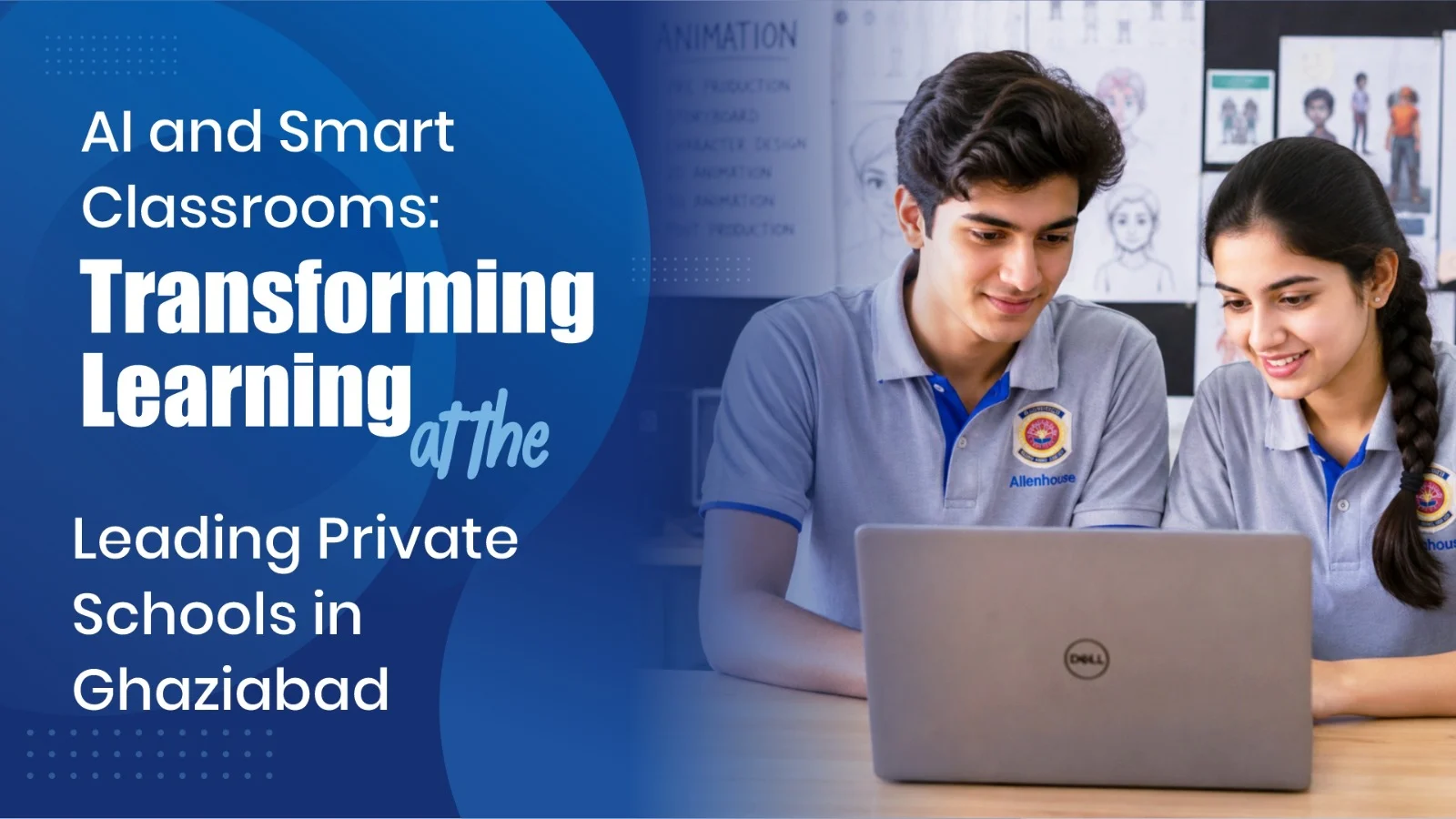
Being a top-rated CBSE school in Ghaziabad, we ensure that the smart classroom infrastructure is used purposefully. Three-dimensional visualisation makes abstract concepts visible in Science, Mathematics and Geography. Real-time assessment tools allow teachers to identify and address misunderstanding during the lesson rather than three days after it. Digital resources extend learning beyond class hours in a structured, purposeful way.
Three-dimensional animation and visualisation making abstract concepts immediately accessible across subjects
Real-time assessment and response tools enabling teachers to adapt lessons to what students actually understand
Digital resources accessible beyond school hours for consolidation, review and independent inquiry
Interactive whiteboard capability enabling discussion and collaborative exploration rather than one-directional content delivery
6. Digital Literacy Education That Prepare Students to Navigate the Information Age
There is a capability that is more urgent than any specific technical skill and less commonly taught than almost any of them. The ability to find information, evaluate its credibility, understand how it has been selected and presented and use it responsibly.
In a world where the volume of available information is essentially infinite and the proportion of it that is reliable, accurate and unbiased is genuinely uncertain, this capability, i.e., digital literacy in the fullest sense, is foundational. A student who can code but cannot evaluate the information their programme processes is technically capable and intellectually vulnerable.
Allenhouse Ghaziabad takes digital literacy seriously as a distinct educational priority. Students are taught to assess sources, understand algorithmic curation, engage with digital content critically and communicate online with the responsibility that the digital age demands.
Source evaluation and credibility assessment taught as structured academic skills, not assumed to develop naturally
Understanding of algorithmic curation and how digital platforms shape what information people encounter
Responsible online communication and digital ethics addressed explicitly as part of the digital literacy curriculum
Critical engagement with digital content modelled through how smart classroom resources are used in daily teaching
Conclusion
The digital age is not waiting for school curricula to catch up. The industries, the careers and the challenges that will define your child's professional life are being shaped right now by the same technological forces that most school timetables have not yet fully absorbed.
As a top-rated CBSE school in Ghaziabad, Allenhouse Public School has absorbed them. The coding education, the animation programme, the Robotics Academy, the STEAM framework, the smart classrooms, the digital literacy curriculum work together toward a single, clear outcome: Students who are genuinely ready for the world as it actually exists.
Visit Allenhouse Ghaziabad to see this and more for real!
Your Queries Answered
1. What Should Families Look for When Comparing Fees Structure of CBSE Schools in Ghaziabad?
Ask for a complete annual fees structure of CBSE schools in Ghaziabad. It must give the breakdown, including tuition, activities, transport and specialised programmes. Compare the overall value, facilities and learning opportunities offered by each school, not just the headline fee.
2. How Do Schools Prepare Students for the Digital Age?
Leading private schools in Ghaziabad combine tech education, smart classrooms, digital literacy and STEAM approach to help students develop future-ready technical and problem-solving skills.
3. What Is the Fee Structure at Allenhouse Ghaziabad?
The school shares a complete and transparent fee structure during the admission process, covering tuition, activities, transport and programme-related charges. Parents are encouraged to review the full fee breakdown before making a decision.
4. What Makes Allenhouse Ghaziabad a Strong Choice for Digital Education?
Dedicated coding, animation and robotics programmes, supported by smart classroom learning and a STEAM-based curriculum, help students build both technical knowledge and creative thinking skills.
5. How Does STEAM Education at Allenhouse Ghaziabad Connect Digital Skills to Academics?
STEAM Education links Science, Technology, Engineering, Arts and Mathematics through practical projects. Students apply coding, robotics, animation and creative thinking to solve real-world problems and strengthen academic concepts.