AI and Smart Classrooms: Transforming Learning at the Leading Private Schools in Ghaziabad
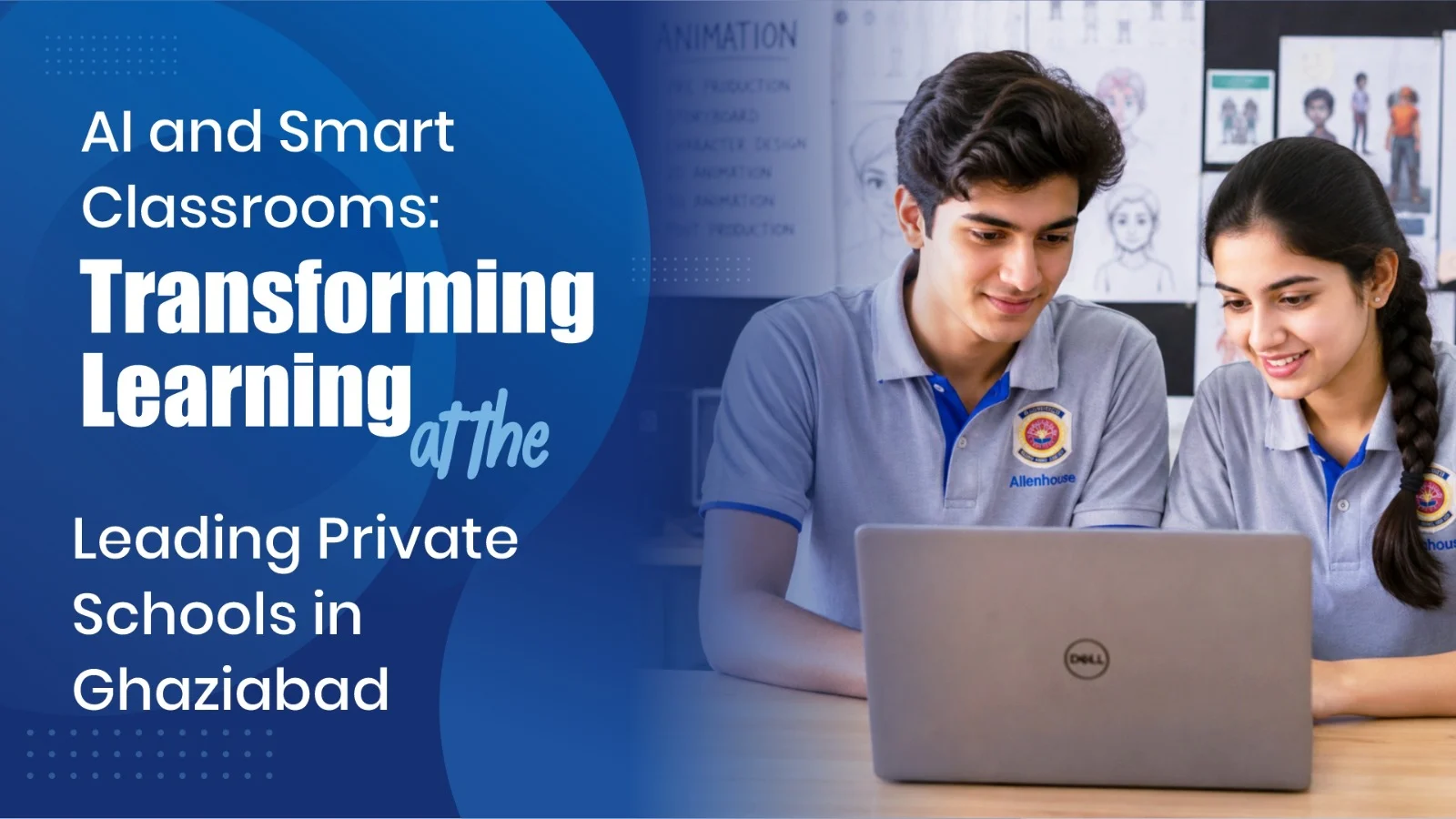
Smart classrooms and AI-integrated learning are no longer features that distinguish exceptional schools from average ones. They are becoming the essentials for any school serious about preparing students for what comes after graduation. For the leading private schools in Ghaziabad, this integration is already built into daily teaching across every class level. This blog covers what that actually looks like, why it matters and what families should understand before choosing a school on this basis.
Introduction
There is a version of the smart classroom that exists only on school websites. An interactive board on a wall, a teacher pointing at a colourful slide, students sitting in the same rows they have always sat in. Technology has changed. The teaching has not.
Then there is the version that actually transforms learning. Where the board responds to student input. Where the lesson adapts based on what students already understand and what they do not. Where the data generated by a class session informs how the next one is designed. Where students are not passive recipients of digital content but active participants in a learning environment that responds to them.
At Allenhouse Public School, Vasundhara, one of the leading private schools in Ghaziabad, we have built toward the second version. Not because technology is impressive but because it produces better learning outcomes when it is implemented with genuine pedagogical intent rather than as a visible indicator of modernity.
This blog covers what AI and smart classrooms actually contribute to education, how Allenhouse has integrated them and what parents evaluating schools in Ghaziabad should specifically look for.
What is a Smart Classroom?
A smart classroom is not defined by the presence of a digital board. It is defined by whether technology meaningfully changes the quality of what happens between the teacher and the student. At its most basic, a smart classroom includes interactive display technology, internet connectivity and digital content aligned to the curriculum. At its most developed, it includes tools that collect data about student understanding in real time, platforms that allow students to engage with content actively rather than passively and systems that allow teachers to differentiate instruction based on what the technology reveals about where each student is.
The difference between a classroom with a screen and a genuinely smart classroom is the difference between digitising traditional teaching and rethinking teaching around what digital tools make possible.
At Allenhouse, our classrooms are equipped with smart class technology across every level. From primary through senior secondary, the technology is integrated into daily teaching methodology.
Interactive digital boards replace static whiteboards, allowing real-time annotation, multimedia integration as well as student response collection
Cloud-based learning tools enable collaborative assignments that extend learning beyond the physical classroom
Digital content is mapped to the CBSE curriculum and updated regularly
Student response systems allow teachers to assess comprehension across an entire class simultaneously rather than inferring it from a few raised hands
What Does AI in Education Mean?
Artificial intelligence in education is a phrase that covers applications such as relatively simple adaptive content platforms to sophisticated systems. The advanced systems analyse learning patterns and generate personalised recommendations.
Personalised Learning Pathways
One of AI's biggest strengths is its ability to adapt learning to each student's pace and understanding. Therefore, instead of delivering the same lesson in the same way to every student, AI-powered platforms adjust content based on individual progress.
At Allenhouse, adaptive learning tools help teachers quickly identify students who have mastered a concept and those who need additional support or a different teaching approach.
Benefits include:
Learning at an individual pace
Content tailored to each student's progress
Faster identification of concepts that need reinforcement
Better classroom engagement and outcomes
Early Identification of Learning Difficulties
AI can detect patterns in student performance that may indicate learning challenges before they become serious. It highlights recurring mistakes, slower progress, or areas where additional attention may be needed.
This allows teachers to intervene early instead of waiting until learning gaps become significant.
Key advantages:
Detects learning gaps at an early stage
Enables timely teacher intervention
Prevents small challenges from becoming major academic issues
Supports consistent student progress
Reducing Administrative Load on Teachers
AI also improves teaching by handling repetitive administrative work. Tasks such as grading objective assessments, tracking attendance, generating reports, and organising learning resources can be automated.
With less time spent on paperwork, teachers can focus more on planning engaging lessons and providing individual student support.
How teachers benefit:
Automated grading and attendance management
Faster progress reporting
Better organisation of teaching resources
More time for meaningful classroom interaction and personalised guidance
How AI and Smart Classrooms Work Together at Allenhouse
The power of combining AI tools with smart classroom infrastructure is that the technology becomes a complete learning environment rather than a collection of separate features.
1. In a primary classroom at Allenhouse, a mathematics lesson might use an interactive board to present a problem visually, a digital response tool to collect every student's answer simultaneously and an adaptive platform that immediately identifies which students need a simpler entry point and which are ready for an extension challenge. The teacher sees all of this in real time. Then they adjust the next five minutes accordingly.
2. In a middle school science class, students might use digital collaboration tools to work on a shared research task, with the AI platform tracking contribution and engagement patterns that the teacher reviews after class to inform the next lesson's structure.
3. In a senior secondary session, board examination preparation is supported by adaptive practice platforms that identify each student's specific weak areas and prioritise those in their revision rather than applying a uniform revision schedule to every student regardless of their individual profile.
The common thread is that technology is serving the teaching rather than replacing it. The teacher remains the most important person in the room. The technology makes them more informed, more responsive and more capable of genuinely differentiating their instruction.
Does AI Replace Teachers?
No. And the reason is worth understanding rather than simply asserting. AI systems are very good at processing data, identifying patterns and delivering consistent content at scale. They are not good at the things that make teaching genuinely transformative, such as:
reading the emotional state of a student who is struggling
knowing when a concept needs to be approached from a completely different angle
building the relationship of trust that makes a student willing to ask for help.
At Allenhouse, our position on this is clear. AI tools extend what our teachers can do. They do not substitute for what our teachers are. A teacher who has AI-generated data about which students are struggling with which concepts walks into the next lesson more prepared, more targeted and more capable of using their time with students on the things that technology cannot do. That is the correct relationship between AI and teaching and it is the one we have built.
AI Literacy as a Curriculum Component
Beyond using AI as a teaching tool, Allenhouse also teaches students to understand AI as a subject. This distinction matters. A student who uses AI tools in school but never learns how they work, what their limitations are and what ethical questions they raise is a student who is being shaped by technology rather than equipped to evaluate it. From Class 6 onwards, Allenhouse integrates AI literacy into the digital skills curriculum. We aim to cover:
How AI systems work conceptually: training data, pattern recognition, how recommendations are generated
Where AI is applied across industries and what problems it solves and creates
Ethical dimensions: bias in AI systems, privacy implications as well as accountability questions
Practical critical use: evaluating AI-generated outputs and understanding when AI tools are reliable and when they require human judgment
This combination, using AI as a learning tool while also understanding it critically - is what genuine digital literacy looks like in a best K-12 school in Ghaziabad.
Smart Classrooms and Academic Performance: What the Evidence Shows
The research on technology-integrated learning is more nuanced than either enthusiastic advocates or sceptical critics typically acknowledge. Technology in classrooms does not automatically improve academic performance. What improves performance is technology used with clear pedagogical intent, integrated into teaching methodology that has been designed to leverage what the technology makes possible.
Schools that purchase interactive boards and continue teaching exactly as before see minimal improvement. Schools that redesign their teaching approach around what the technology enables, using real-time response data, adaptive content, collaborative digital tools and multimedia explanation for complex concepts, see measurable gains in engagement, comprehension and retention.
What Parents Should Look For in a School's Smart Classroom Programme
For families evaluating CBSE schools in Vasundhara Ghaziabad and the broader Ghaziabad area on the basis of technology integration, the questions worth asking go significantly beyond whether the school has a digital board in every room.
Is the technology used in every lesson or only in specific subjects?
Does the school use adaptive learning platforms that personalise content to individual students?
How do teachers use the data generated by digital tools to inform their teaching?
Are students taught to use AI tools critically, or only to use them?
Is the technology infrastructure maintained and updated, or was it installed once and left to become outdated?
How does the school approach digital safety and responsible use?
At Allenhouse Ghaziabad, every one of these questions has a specific and confident answer. Families are encouraged to visit the campus and observe smart classrooms in use during a regular lesson rather than a demonstration, which will tell them more than any tour or prospectus.
Conclusion
AI and smart classrooms are transforming education at the leading private schools in Ghaziabad that have implemented them with genuine pedagogical intent rather than as visible markers of modernity. At Allenhouse Public School, Vasundhara, this integration runs from primary classrooms through senior secondary, connected to a broader digital skills curriculum that includes coding, robotics, AI literacy and digital citizenship.
The goal is not a school full of technology. It is a school full of students who are better taught, better understood and better prepared because the technology their teachers use makes all three more possible. For families in Ghaziabad looking for a best K-12 school in Ghaziabad where smart classrooms and AI are genuinely integrated into learning rather than decoratively present, we would like to show you what we have built.
Your Queries Answered
1. What makes a leading school in Ghaziabad best for AI and smart classroom learning?
Leading schools integrate AI-enabled smart classrooms, interactive learning tools and digital technologies into everyday teaching. Students learn through engaging lessons while building digital skills and AI awareness from an early stage.
2. Does AI replace teachers in smart classrooms?
No. AI supports teachers by tracking learning progress, identifying learning gaps and personalising instruction. Teachers continue to lead the classroom, provide guidance and build meaningful learning experiences.
3. How do smart classrooms benefit students?
Smart classrooms make learning more interactive, engaging and personalised. They improve concept clarity, encourage participation, provide instant feedback and help students develop digital literacy alongside academic knowledge.
4. What should parents look for in a technology-enabled K-12 school?
Choose a school where technology is part of everyday learning, teachers use digital tools effectively, AI and digital literacy are included in the curriculum and students are taught safe and responsible technology use.
5. How does Allenhouse teach students to use AI responsibly?
Allenhouse introduces AI literacy through age-appropriate lessons on responsible technology use, online safety, privacy and critical thinking. Students learn to use AI as a learning tool while understanding its ethical and practical limitations.